Tag: trauma-informed creativity

  • Creative Procrastination Isn’t a Problem

    Creative Procrastination Isn’t a Problem

    Why delaying your creative work is often a form of intelligence, not failure

    Why delaying your creative work is often a form of intelligence, not failure

    Procrastination is one of the most common concerns creatives bring into my sessions.

    “I don’t know why I keep avoiding this project.”
    “I’ve been staring at the same page for weeks.”
    “I want to make something, but I can’t get started.”

    In creative culture, and especially in professional spaces, procrastination is often framed as laziness or resistance. But what I’ve found, both in my own work and with the artists and writers I support, is that procrastination is rarely the real issue. It’s a signal. A protective strategy. A nervous system adaptation trying to help.

    In other words, creative procrastination isn’t a problem. It’s a pattern. And like all patterns, it can be understood, honored, and reworked into something more aligned.

    Why Creatives Delay (Even When They Care Deeply About the Work)

    When someone delays creative work, it’s usually for one of the following reasons:

    • Their nervous system doesn’t feel safe enough to begin

    • Their perfectionism has overridden their sense of play

    • Their internal critic is louder than their curiosity

    • Their body or mind is in a state of overwhelm, freeze, or fawn

    • The emotional cost of starting feels too high to risk

    These reasons are not excuses. They are context. They often originate from lived experiences of trauma, burnout, rejection, or identity suppression.

    Procrastination, in these cases, is the body’s way of saying:

    “This might hurt. I’m not ready. Please wait.”

    That message deserves respect. It also deserves tools that help creatives move forward at a pace that doesn’t trigger collapse.

    procrastination and creative productivity

    The Role of the Nervous System in Creative Avoidance

    Many of the creatives I work with live with chronic illness, neurodivergence, or trauma histories. Their nervous systems are not always operating in the background. Often, they are central players in how (and when) creative work gets done.

    A person in fight or flight may push themselves through deadlines, then crash.
    A person in freeze may go numb and call it laziness.
    A person in fawn may agree to projects they cannot complete without depletion.

    Understanding these patterns allows us to reframe procrastination. It is not resistance to creativity. It is an attempt to regulate safety. And once that need is recognized, the solution is not to push harder. It is to meet the body where it is.

    A More Helpful Question Than “Why Am I Delaying?”

    Instead of asking “Why can’t I just do it?” I help clients ask:

    • What does this delay protect me from?

    • What would I need to feel safe enough to start?

    • What does the task represent emotionally?

    • What is the smallest first step that feels accessible?

    • Can I approach this as an experiment, not a test?

    Often, these questions uncover deeper creative truths. They also create pathways back to the work that are grounded in care, not pressure.

    procrastination isn't a creative problem

    What This Means for You or Your Clients

    If you are a creative person who struggles with procrastination, or if you support people who do, consider this:

    You may not need to fix the delay.
    You may need to understand the story behind it.
    And once that story is named, the work can begin—gently, differently, and in your own time.

    In my 1:1 Creativity and Wellness Sessions, we explore the emotional, psychological, and physical context of your creative life. We look at where avoidance shows up, what it is trying to do for you, and how to shift it without shame. This is not productivity coaching. It is permission to return to your work with softness and strategy.

    Book a Call Today

    You do not have to push through. You just have to begin where you are.

  • Redefining Creative Success with Chronic Illness or Disability

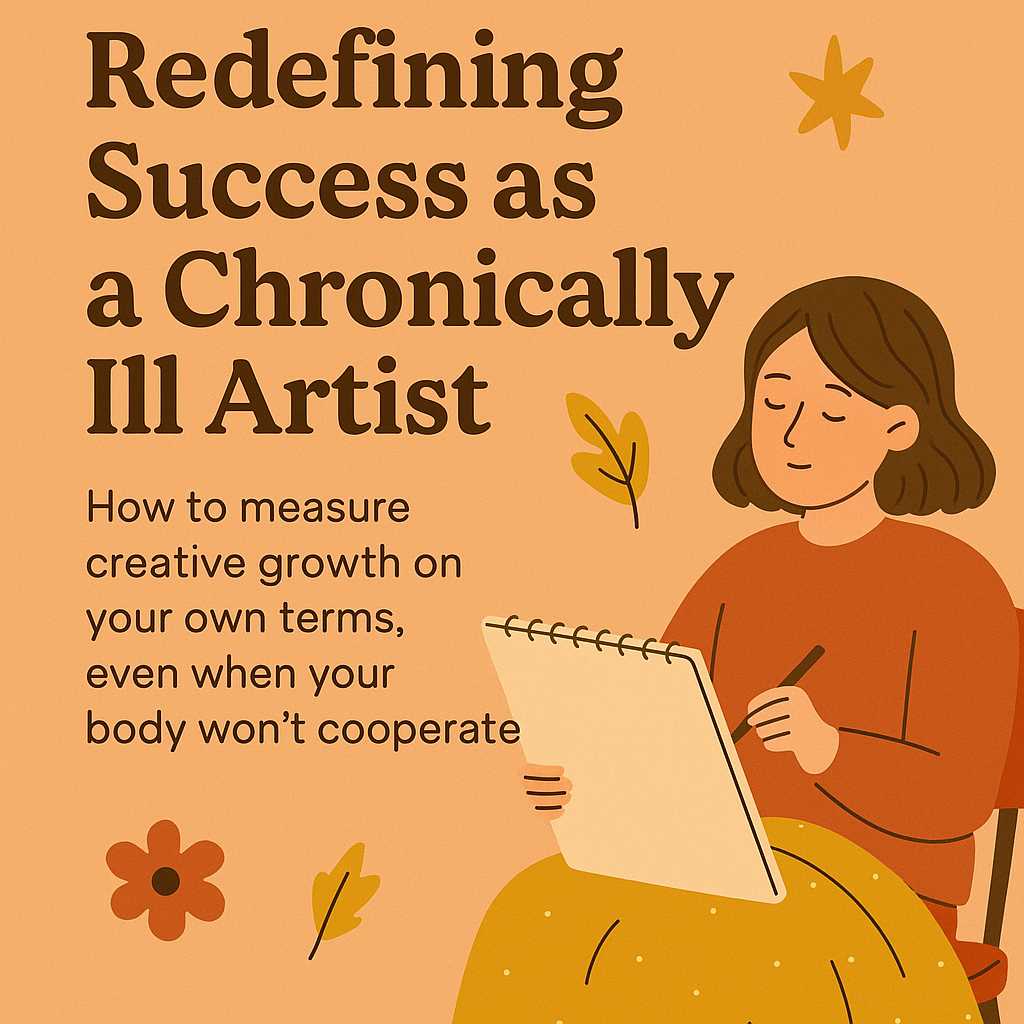
    Redefining Creative Success with Chronic Illness or Disability

    how to define creative success

    What sustainable creative work looks like when your health disrupts your process

    Success in the creative industries is often measured by consistency, productivity, and public visibility. But what happens when your creative capacity is interrupted by chronic illness, fatigue, or unpredictable health conditions?

    This is a question I encounter regularly in my own practice as a working artist with chronic mental health challenges, and in the sessions I facilitate with writers, makers, and creative professionals navigating burnout, neurodivergence, or long-term health conditions.

    The reality is simple but under-discussed: traditional models of creative success are not built for disabled or chronically ill bodies. Yet creative people in these bodies continue to make, reflect, share, and build meaningful work. The key is redefining success based on sustainability and self-awareness, not external metrics.

    Let’s explore how that shift happens – and why it matters.

    Why Success Often Becomes Inaccessible for Chronically Ill Creatives

    Creative success, as defined by dominant culture, often assumes the following:

    • Consistent emotional regulation

    • Predictable physical energy

    • Continuous online presence

    • Ability to network, pitch, and self-promote

    • Linear progress and output

    For someone living with chronic illness or disability, any one of these factors can become inconsistent or inaccessible. And yet, because these standards are rarely questioned, creatives often internalize the idea that they are failing … not just at work, but at being creative at all.

    This mindset leads to shame, disconnection, and burnout. It also leads to many creatives stepping away from their practices completely.

    But the problem isn’t their creativity. The problem is the framework they’re trying to create within.

    Redefining Creative Success with Chronic Illness or Disability

    What Redefining Success Actually Looks Like

    In my 1:1 Creativity and Wellness Sessions, I work with clients to shift their focus from output to alignment. Instead of asking, “Am I doing enough?” we ask:

    • Does my creative practice support or deplete me?

    • Am I honoring my physical and cognitive limits, or pushing through them?

    • Can I recognize progress in ways that reflect my reality, not just external standards?

    • Am I working in rhythms that match my actual life, not an imagined ideal?

    We also identify internalized expectations that may have been inherited from hustle culture, ableist work models, or past experiences of invalidation.

    Redefining success might mean:

    • Changing timelines for projects without self-blame

    • Measuring progress in small, sensory moments instead of visible achievements

    • Pausing public-facing work to protect personal energy

    • Shifting medium or pace to accommodate health fluctuations

    • Reclaiming creative identity even when output is minimal or private

    These are not shortcuts. They are adaptations. And they allow the artist to continue working—honestly, sustainably, and with dignity.

    redefining creative productivity

    The Emotional Weight of Slowing Down

    As someone who supports herself through creative work, I understand the tension here. Slowness isn’t always easy. There are financial pressures. There are fears about being forgotten. There are cultural narratives that equate worth with visibility and speed.

    But I’ve learned, through lived experience, that fighting my own body costs more energy than I can afford. The shift toward working with my real pace, rather than against it, has made my creative work more honest. More consistent. More mine.

    This is a perspective I now share with clients: you don’t have to earn your creative identity through endurance. You can build it through relationship.

    Who This Work Is For

    You might benefit from this kind of reframing and support if:

    Ready to Reframe Success on Your Own Terms?

    I offer private, nonjudgmental Creativity and Wellness Sessions for artists, writers, makers, and creative professionals who are ready to reimagine what creative life looks like within the reality of their body and mind.

    Whether you’re returning after a long pause or actively trying to maintain your work inside a difficult season, we can design something that fits you.

    Book a Call With Me Now

    You don’t need to prove your worth by producing more. You are allowed to succeed slowly. You are allowed to succeed differently.