Author: Kathryn

  • Thirteen Artists Whose Health Conditions Changed Their Creative Process

    There is a version of this story that I find less useful the longer I work in this field. It is the version where an artist faces illness or disability, pushes through, and produces great work anyway. The word “anyway” is doing a lot of work in that sentence. It sets up health as the thing to be overcome, and the art as the proof that it was.

    What I have found, across years of research into how health shapes creative practice, is that the relationship between condition and work is rarely adversarial in the way that story implies. In the cases below, the condition was not on the outside, pressing against a creative life from without. It was inside the process. Inside the materials, the methodology, the timing, the collaborations, the very way the work got made.

    None of these thirteen artists overcame. Some of them were killed, institutionalized, or worked through decades of inadequate or absent care. The work that remains is not a testament to triumph. It is a record of what happens when a creative practice is built from the actual conditions of a life, including the health conditions, rather than in spite of them.

    I offer these profiles as a reference, and as a companion to the longer thinking I have been doing about what this means for artists navigating health now.

    Evelyn Glennie, b. 1965, Scotland. Deaf percussionist.

    Glennie began losing her hearing at eight from progressive nerve deterioration and was profoundly deaf by twelve. She was told by the Royal Academy of Music that a deaf student in the percussion program would be inappropriate. She was accepted and graduated with the highest honors of her year. What she built in place of conventional hearing is a distributed somatic relationship to sound: frequencies felt in the legs, chest, face, and neck. She performs barefoot so vibrations travel directly from the floor into her body. The methodology she developed is more physically integrated than what most hearing percussionists ever build, because they never have to.

    Francisco Goya, 1746-1828, Spain. Deaf painter.

    Goya was forty-six when a severe illness left him profoundly deaf overnight. He continued his court commissions for years. Then he witnessed the French invasion of Spain in 1808 and the six years of war that followed, and he watched it all in enforced silence. After the war, he moved to a country house outside Madrid already carrying the name Quinta del Sordo, the Villa of the Deaf. Between 1820 and 1823, he covered the interior walls with paint directly on plaster: fourteen paintings, no patron, no commission, no intended viewer except himself. The Black Paintings, Saturn devouring his son among them, were discovered after his death. The solitude the deafness enforced, compounded by the trauma he had witnessed, produced the working conditions for the darkest and most private body of work he ever made.

    Georgia O’Keeffe, 1887-1986, United States. Painter with macular degeneration.

    Macular degeneration began affecting O’Keeffe’s central vision around 1971, when she was in her early eighties, and by 1972 she had lost most of it and stopped painting. She began working in clay instead, which does not require the same visual precision. A young potter named Juan Hamilton came to work for her as an assistant and introduced her to pottery seriously. She made clay pots and forms through the late 1970s, then returned to painting at larger scale with bolder marks her remaining peripheral vision could manage. She died at ninety-eight, still making. The vision loss did not end the practice. It moved it.
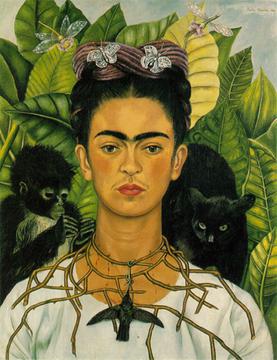
    Frida Kahlo, 1907-1954, Mexico. Painter with multiple chronic conditions following bus accident.

    Kahlo was eighteen when a bus accident fractured her spinal column, collarbone, and ribs, fractured her right leg in eleven places, and drove a steel handrail through her hip and out through her pelvis. Her mother had a special easel built for use while lying down. A mirror was installed in the canopy of her bed. She painted herself because she was the subject available to her in the position she was in. She underwent thirty-five surgeries across her lifetime. The self-portraits that came from that horizontal studio are among the most psychologically precise paintings of the twentieth century. The constraint is not incidental to the work. The constraint is in the work.

    Django Reinhardt, 1910-1953, Belgium. Romani jazz guitarist with severe hand injury.

    Reinhardt was eighteen when a caravan fire in November 1928 severely burned his left hand, fusing the ring and little fingers into a curled position he could not straighten. The guitar requires four fingers on the fretting hand for conventional harmonic range. He had two that could extend. During his recovery he rebuilt his relationship to the instrument entirely, inventing a technique in which the index and middle fingers carried all the melodic work while the fused fingers found their way into chord shapes that a conventional undamaged hand would never arrive at. The style that came from that technique is what we now call jazz manouche. The style is the reinvention. The reinvention is the art.

    Dorothea Lange, 1895-1965, United States. Photographer with polio.

    Lange contracted polio at seven, leaving her right leg significantly weaker and giving her a characteristic limp she carried throughout her life. She spoke directly about it late in her life: “It was the most important thing that happened to me. It formed me, guided me, instructed me, helped me and humiliated me all at once. I’ve never gotten over it and I am aware of the way I walk.” She moved through spaces differently than a fully mobile person moves, more slowly, more attentively to terrain. She was less threatening to approach in a migrant camp than a healthy man striding through with a camera. Her subjects had more time to adjust to her presence before she lifted the camera. Migrant Mother, 1936, is a photograph made by the body Lange was in.

    Yayoi Kusama, b. 1929, Japan. Visual artist with neurological hallucinations.

    Kusama has experienced neurological hallucinations since childhood: flowers speaking to her, dots and nets spreading across every surface until they covered her own hands and body. She began painting the hallucinations as a child, surrounding the perceptual experience with itself in paint and fabric and mirror until the fear reduces. She calls it art therapy. Since 1977 she has lived by her own choice in a psychiatric facility in Tokyo, walking each day to her nearby studio. She is now in her late nineties and among the most commercially recognized living artists in the world. Every dot started as a hallucination.

    Martín Ramírez, 1895-1963, Mexico/United States. Institutionalized artist.

    Ramírez immigrated to California in 1925 for railroad and mining work. Around 1930 he stopped speaking. He was institutionalized and eventually placed at DeWitt State Hospital in Auburn, California, where he would spend the rest of his life. His diagnosis was dementia praecox. He began making drawings from whatever materials the hospital offered: brown paper bags, scraps of mail, toilet paper. He made paste from breadcrumbs and saliva. He used shoe polish for color. The drawings depict tunnels and arcades and landscapes receding into impossible depth, trains and deer and Madonna figures and animals. A psychiatrist named Tarmo Paloheimo began collecting them in the 1940s rather than destroying them, then standard practice. Ramírez had no language. The drawing was the only communication available to him. His work is now held in major international collections.

    Virginia Woolf, 1882-1941, United Kingdom. Novelist with severe mental illness.

    Woolf navigated severe mental illness across her adult life, with extended periods of incapacitation during which she could not read, write, or think coherently, sometimes lasting months. She tracked these states in her diary with remarkable precision, learning when to push and when to rest, what kinds of work were possible in which states. The Waves was written during a period of creative energy she described as intense and sometimes frightening in its speed. Mrs. Dalloway came after a breakdown, in relative stability. To the Lighthouse was written across a period of fluctuating health. The shape of each book is partly the shape of the mental state in which it was written. She died by suicide in March 1941, walking into the River Ouse with stones in her coat pockets.

    Nina Simone, 1933-2003, United States. Musician with bipolar disorder, diagnosed late.

    Simone applied to the Curtis Institute of Music in Philadelphia and was rejected. She and many others believed it was because she was Black. She spent her career navigating both racism and what was eventually, much later in her life, diagnosed as bipolar disorder, a condition that went untreated or mistreated for decades while being attributed to her personality. Her performances were notoriously unpredictable. She might play two hours beyond the contracted set or walk off mid-song. She left the United States in 1974, living in Liberia, Switzerland, the Netherlands, and France, with long periods of not performing at all. She received her diagnosis in 1991, in her late fifties. The rhythm of her career was organized by her condition whether she understood it as such or not.

    Charlotte Salomon, 1917-1943, Germany. Painter killed at Auschwitz.

    Salomon grew up in a family marked by multiple suicides across generations. She fled Nazi Germany for the south of France in 1939. Between 1940 and 1942, while hiding near Nice and knowing what was coming for her, she created Leben? oder Theater? (Life? or Theater?): 1,325 gouaches on small sheets of paper, a complete autobiographical account of her life and family painted with musical references and overlaid text. When she finished, she gave the full stack to her doctor and said: “Keep this safe. It is my whole life.” She was deported to Auschwitz in September 1943 and killed on October 10, 1943. She was twenty-six and five months pregnant. The work survived because her doctor kept it. It is held at the Jewish Historical Museum in Amsterdam.

    Keith Haring, 1958-1990, United States. Visual artist with HIV/AIDS.

    Haring built his reputation through chalk drawings in the New York City subway system, on the black paper covering unused advertising spaces, and through gallery shows and large-scale international commissions. He was diagnosed with HIV/AIDS in 1988, at thirty. He disclosed his diagnosis publicly. He founded the Keith Haring Foundation in 1989 to support AIDS organizations and children’s programs, opened the Pop Shop to generate foundation income, completed major mural commissions internationally, and collaborated with ACT UP. He kept making. The work from his final two years is more direct about mortality and loss than the earlier work. He died in February 1990 at thirty-one. His final two years are the ones most closely associated with his name.

    Judith Scott, 1943-2005, United States. Fiber sculptor with Down syndrome and deafness.

    Scott was born with Down syndrome and deafness, institutionalized at seven, and remained in state institutions for thirty-five years until her twin sister Joyce became her legal guardian in 1985. In 1987, Judith was enrolled at Creative Growth Art Center in Oakland. For nearly two years she made very little. Then a visiting fiber artist named Sylvia Seventy offered a class. Judith walked in and picked up the fiber. She did not weave. She wrapped, small objects at first, then larger ones, then person-sized sculptures of dense, layered yarn and thread concealing found objects inside. She worked for eighteen years until her death in 2005, producing more than two hundred pieces now held in major international collections. She had no verbal language. The fiber wrapping was the form through which a particular interior world could be expressed.

    What these thirteen artists share is not resilience in the popular sense, not the defiance of their conditions or the triumph over them. What they share is that the condition was inside the process. It shaped the methodology. The methodology shaped the work. The condition and the work are not in separate columns.

    This is a different claim from the overcoming story, and I think it is a more useful one for artists navigating health now. The question is not how to continue making in spite of a health condition. The more useful question is what the condition is doing to the process, and what the process is becoming in response. These thirteen lives suggest that the answer, more often than we are told, is something real and particular and worth attending to.

    If you are an artist navigating this territory and you want support in mapping exactly how your health is showing up in your creative practice, that is the work I do.
  • How Rhythm and Wellness Influence the Creative Process

    How Rhythm and Wellness Influence the Creative Process

    Creativity is not just about technique or inspiration—it’s deeply connected to our mental and emotional state. How we feel, how energized we are, and how in tune we are with our inner rhythms can all impact the work we create. But what if there was more to creativity than just inspiration or mood? What if the very rhythms of our brain could influence our art?

    Recent research into brainwaves and rhythm reveals that the brain’s internal oscillations—whether delta, theta, alpha, beta, or gamma waves—play a huge role in shaping how we feel, think, and experience the world. These brain rhythms are not just biological phenomena; they affect everything from our emotional states to the way we perceive time, space, and creativity. Understanding how rhythm influences our mind and body opens new ways of thinking about creativity as a holistic experience.

    For creatives, this deeper understanding of rhythm can illuminate how the state of the body and mind influences their work. Whether it’s the calming effects of alpha waves, the deep emotional release associated with theta waves, or the heightened energy of beta waves, each brain rhythm plays a part in shaping the energy we bring to our art.

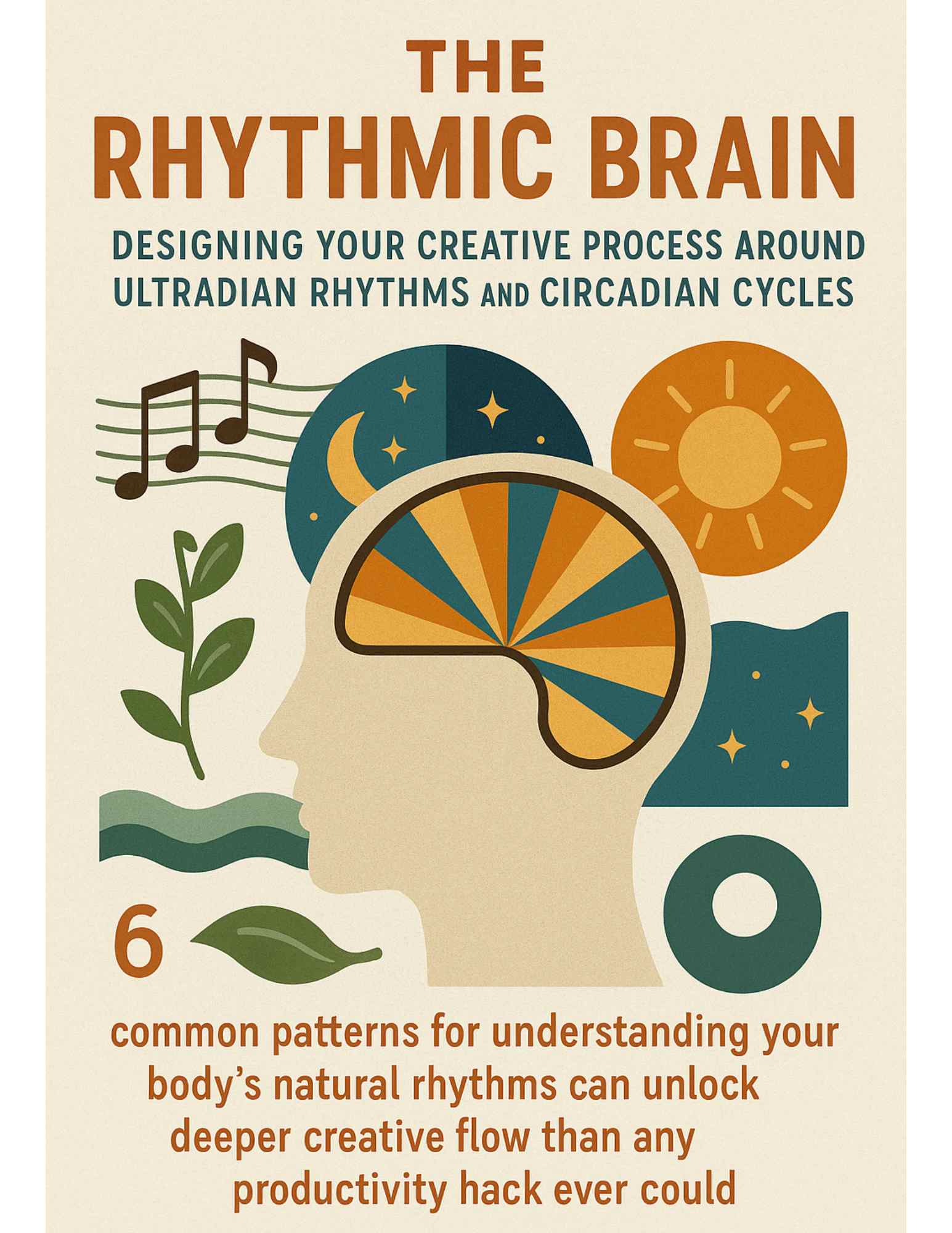
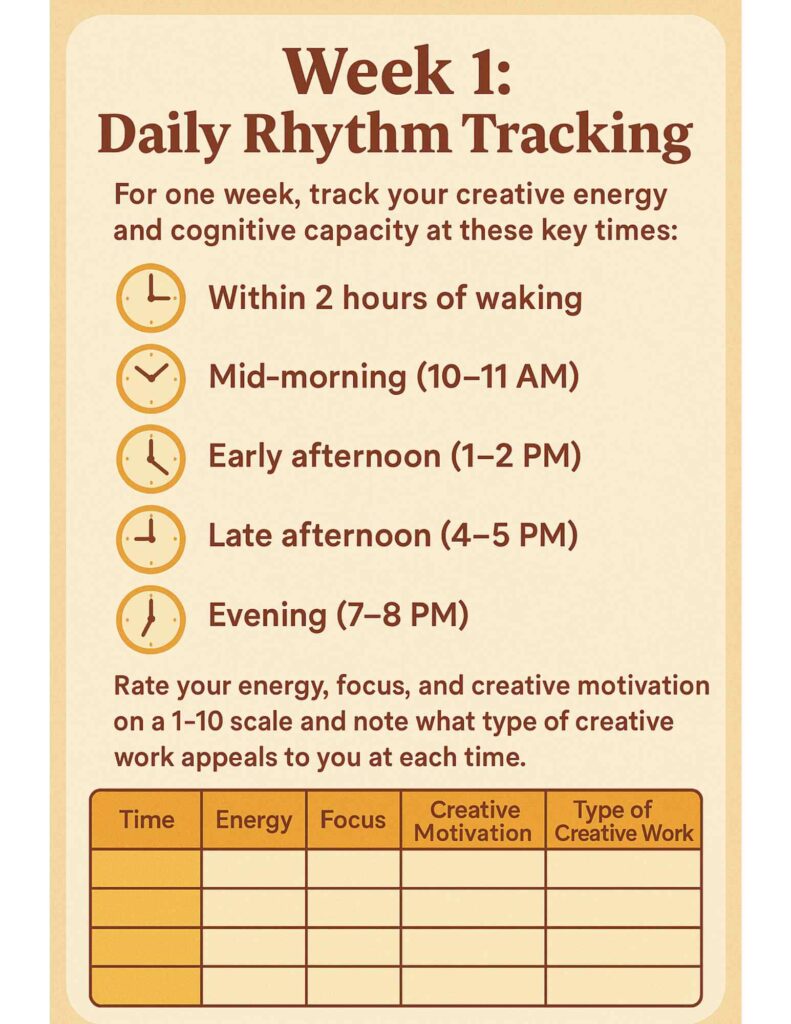
    The Rhythmic Brain PDF booklet provides a unique insight into how wellness, energy, and health impact creativity. This 45-page guide is perfect for anyone interested in the connection between the brain’s rhythms and the creative process, offering a fresh perspective on how we can channel our emotional and mental states into art.

    If you’re curious to explore how rhythm and wellness intertwine with creativity, download The Rhythmic Brain and discover how understanding your brain’s rhythms can deepen your connection to your craft.

  • Have You Seen This Science-Based 4-Week Pattern Recognition Journey for Artists and Writers?

    Have You Seen This Science-Based 4-Week Pattern Recognition Journey for Artists and Writers?


    What if the key to unlocking your creative potential isn’t about finding more time, better tools, or perfect conditions but about understanding the invisible patterns that already govern your creative process through the lens of proven psychological principles?

    As artists, writers, and makers, we often struggle with blocks, self-doubt, and inconsistent creative flow without realizing that our internal patterns around creativity are operating below conscious awareness. These patterns – the stories we tell ourselves, the beliefs we hold, the emotional states we experience – either support or sabotage our creative work every single day.

    The Creative Pattern Recognition Journal combines insights from Neuro-Linguistic Programming (NLP), creative psychology, and neuroscience research to offer a gentle, science-backed approach to identifying these patterns and experimenting with small shifts that can create profound changes in your creative experience.

    Each week begins with psychoeducational content that explains the “why” behind the exercises, helping you understand how your brain processes creative information, why certain patterns form, and how conscious awareness can rewire limiting neural pathways. This isn’t just journaling; it’s applied neuroscience for creatives.

    Over four focused weeks, you’ll develop both the theoretical understanding and practical tools needed to work with your creative process rather than against it. This isn’t about forcing yourself into someone else’s creative routine or following generic advice. It’s about discovering what works specifically for your brain, your body, and your unique creative journey through proven psychological frameworks.

    Check it out now. It’s free!

  • When Rest Is the Practice: Redefining Productivity for Artists

    When Rest Is the Practice: Redefining Productivity for Artists

    Rest is not a reward for finishing your work.
    Rest is part of the work.

    This may sound simple. But for many artists, writers, and makers, it’s a radical shift.

    We are taught to measure our value by output. Even in creative fields that claim to prize originality, we’re surrounded by metrics — posts per week, projects per year, word counts, launch schedules.

    But what if real creativity needs something else? What if your most important work begins not with doing more, but with learning to rest?

    Why Rest Feels So Hard for Creatives

    Most artists are deeply driven. We care about our work. We feel guilty when we’re not making progress. We fear falling behind, being forgotten, or losing momentum.

    We also live in a culture that romanticizes burnout and idolizes hustle. In that context, rest feels like weakness. Stillness feels like giving up.

    But in reality, chronic pushing often leads to:

    • Creative depletion
    • Emotional disconnection
    • Flattened ideas
    • Physical or mental health crashes

    What we call “slowing down” may actually be the start of returning to ourselves.

    What Happens When You Make Rest Part of the Process

    Rest is not the opposite of productivity.
    It is what allows your creative process to continue.

    When rest is integrated into your rhythm:

    • Ideas percolate more naturally
    • Your nervous system has space to recover
    • You reconnect to intrinsic motivation, rather than fear-based urgency
    • You begin to make from a place of enough-ness, not scarcity

    You are not a machine. You’re an organism. You grow through cycles — including stillness.

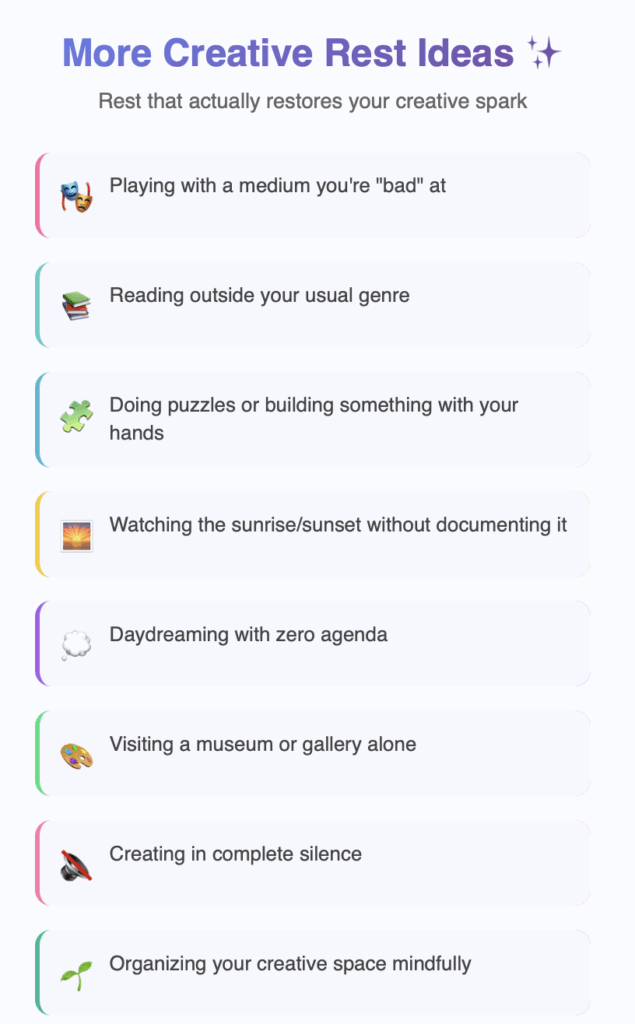
    What Creative Rest Can Look Like

    Not all rest looks like napping. For creatives, rest can mean:

    • Saying no to projects that don’t align
    • Taking breaks between drafts or phases
    • Switching mediums to rest your brain
    • Spending time consuming nourishing art
    • Going on a walk without a podcast
    • Letting something be “in progress” without forcing an outcome

    Rest is creative. It gives shape to your work by creating space around it.

    Letting Go of Linear Productivity

    You might not produce in tidy timelines. You may need to move in seasons. That doesn’t make you lazy. It makes you alive.

    Linear productivity says: keep going.
    Creative productivity says: listen and respond.

    If you’ve been stuck, exhausted, or doubting yourself, consider this: maybe the answer isn’t to push through. Maybe the next step is to pause.


    Need support redefining productivity on your own terms?

    I offer personalized reflections for artists and writers who want to reconnect with their creative rhythm. I’ll read your past work and help you understand how your health and creative flow are intertwined.

    Explore the Art Meets Health Creative Wellness Blueprint

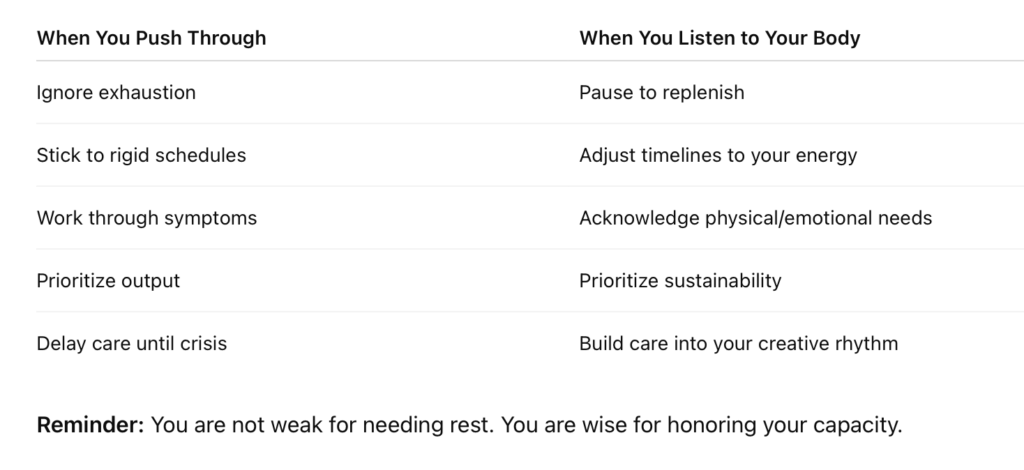
  • The Invisible Cost of Pushing Through: What Creatives Miss When They Ignore Their Bodies

    The Invisible Cost of Pushing Through: What Creatives Miss When They Ignore Their Bodies

    You’ve probably heard it — or said it — before: “I just need to power through.”

    Maybe it’s a deadline. A burst of inspiration you don’t want to lose. Or the lingering belief that pushing through pain is part of being a “real” artist.

    But over time, that habit can cost you more than you realize.

    When you ignore your body to stay creatively productive, you create an internal split. One part of you makes the work. The other part pays for it.

    Why We Push Through

    Creative culture often romanticizes the idea of suffering for the work. It says things like:

    • “The muse comes at midnight.”
    • “If you’re not exhausted, you’re not serious.”
    • “Pain makes the best art.”

    That story is old. And it is dangerous.

    Many artists and writers have internalized the belief that their body is an obstacle to creativity — that illness, fatigue, pain, or slowness must be pushed aside to stay “legitimate.”

    Especially for people living with chronic illness, mental health challenges, or neurodivergence, this belief becomes a cycle of harm.

    What Gets Lost When You Ignore Your Body

    You may get the piece finished. You may meet the deadline.

    But here’s what you lose:

    • Long-term sustainability
      You burn out. You start associating your work with dread or pain. The thing that once brought you joy becomes a source of pressure.
    • Honest self-connection
      When you ignore your body, you train yourself to ignore other signals too — like intuition, desire, and authentic creative flow.
    • Creative adaptability
      Pushing through often means doing things one way, no matter the cost. You miss the chance to find rhythms, formats, or mediums that might work better for you.

    What Listening Looks Like Instead

    Listening to your body doesn’t mean never pushing yourself. It means discerning when to rest, how to create, and whatyou need to stay well.

    It might look like:

    • Changing your format to better suit your energy
    • Pausing a project to recover instead of forcing a finish
    • Working in bursts and then stepping away without guilt
    • Noticing when your art becomes a coping mechanism instead of a choice

    Your body is not the enemy of your creativity. It is the container for it.

    You Don’t Have to Earn Rest

    You don’t need to crash in order to rest. You don’t need to justify your exhaustion. You don’t need to make up for your limits with productivity.

    Creative work that honors your body is more sustainable, more honest, and more alive.


    Want help exploring how your health is showing up in your creative work?

    I offer personalized assessments based on your existing blog or Substack. I read your archive, pull meaningful quotes, and reflect how your well-being and creativity are already in conversation.

    Learn more about the Art Meets Health Creative Wellness Blueprint.

  • What Your Art Might Be Saying About Your Mental Health (Even If You Didn’t Mean It To)

    What Your Art Might Be Saying About Your Mental Health (Even If You Didn’t Mean It To)

    You sit down to write, paint, sculpt, sing. You’re making something true, something beautiful, maybe even something mundane. But even when you’re not consciously trying to “process” anything, your creative work is carrying messages.

    Sometimes, the work knows things before you do.
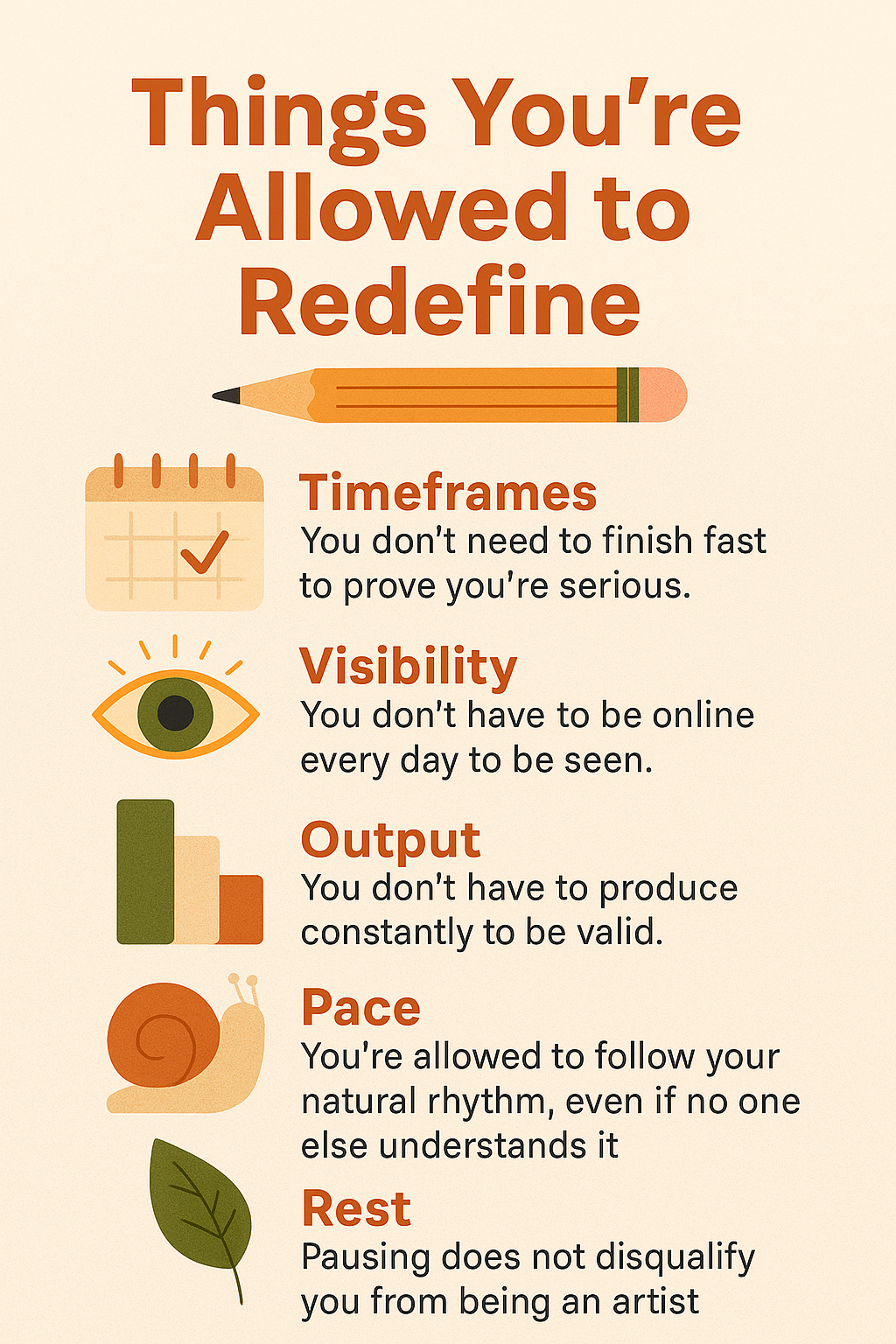
    As a creative, your art is not separate from your inner life. It is shaped by your emotional rhythms, your unspoken thoughts, and the physical experience of being in your body. That means that even when you are not explicitly addressing your mental health in your work, traces of it show up – often in surprising ways.

    Unintentional Honesty in Creative Work

    Artists often describe looking back at their older work and realizing, “Wow, I didn’t know I was going through that.” Themes of loneliness, chaos, fatigue, grief, or craving for control show up even when the subject matter seems unrelated.

    Your creative choices are never neutral. Consider:

    • The recurring metaphors you return to
    • The color palettes or word choices you lean on
    • The moments you skip or censor
    • The shifts in tone or pacing from one project to the next

    All of these may reflect aspects of your internal state — sometimes consciously, often not.

    Examples of Subtle Emotional Storytelling

    You might not write, “I’m anxious and burned out,” but you do write:

    • “I keep feeling like I’m behind, even though no one is waiting for me.”
    • “I sat at my desk and stared through the blinds until the sun went down.”
    • “I keep making small things because I don’t trust myself with big ones.”

    Or maybe you don’t say anything and that silence becomes its own statement. The absence of joy in your writing about your practice. The way you skip over the part where things got hard. The flattening of your tone.

    These choices are the voice beneath the voice.

    Why This Matters

    When you begin to notice the emotional subtext of your work, you begin to understand:

    • What is asking to be processed
    • What you avoid or repress creatively
    • What your body or heart has been holding for you

    This isn’t about analyzing every word or second-guessing your instincts. It’s about making space for awareness. You’re allowed to be surprised by yourself.

    And often, when people finally see what their work has been saying, they feel less stuck. Because something unspoken has been heard.

    Ways to Start Listening

    If you want to reflect on your own work, try this:

    • Choose five past essays, journal entries, or posts at random
    • Highlight moments of repetition, contradiction, or emotional intensity
    • Ask: What was I trying to say here — and what else might I have been expressing without knowing it?

    Sometimes, having another person look with fresh eyes can make all the difference.

    Want help understanding what your work might be saying about your inner life?

    I offer personalized written assessments for artists, writers, and makers. Using your Substack or blog, I’ll pull powerful quotes and reflect back the emotional and creative patterns shaping your art.


    Explore the Art Meets Health Creative Wellness Blueprint.

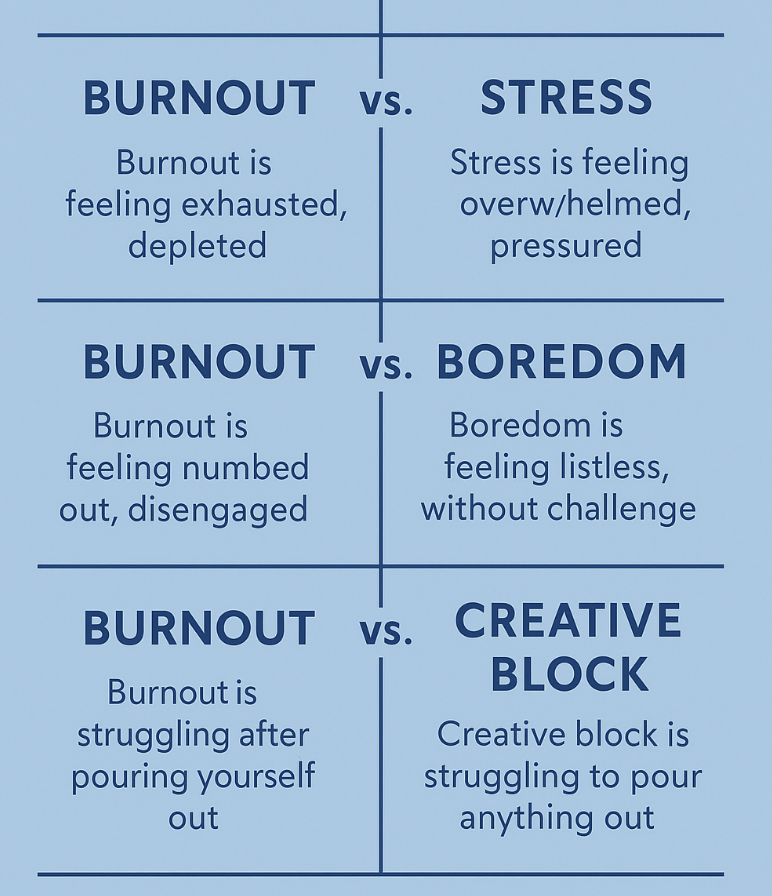
  • Is It Burnout or Creative Block? How to Tell the Difference

    Is It Burnout or Creative Block? How to Tell the Difference

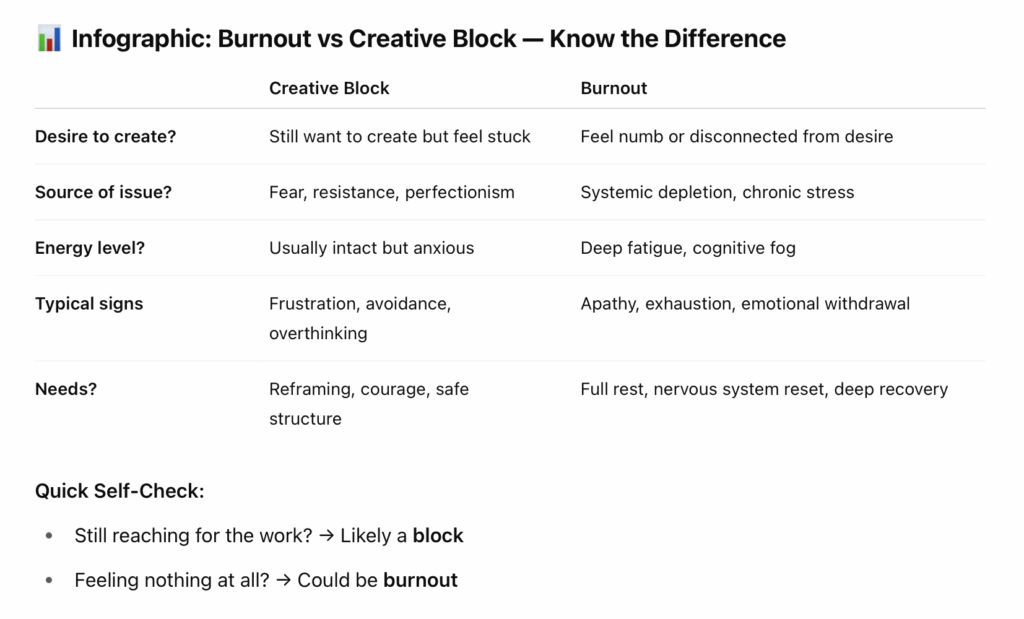
    You sit down to create and nothing comes. Your mind feels foggy. You keep thinking you should be able to push through, but you can’t find the spark. Is it burnout? Or is it creative block?

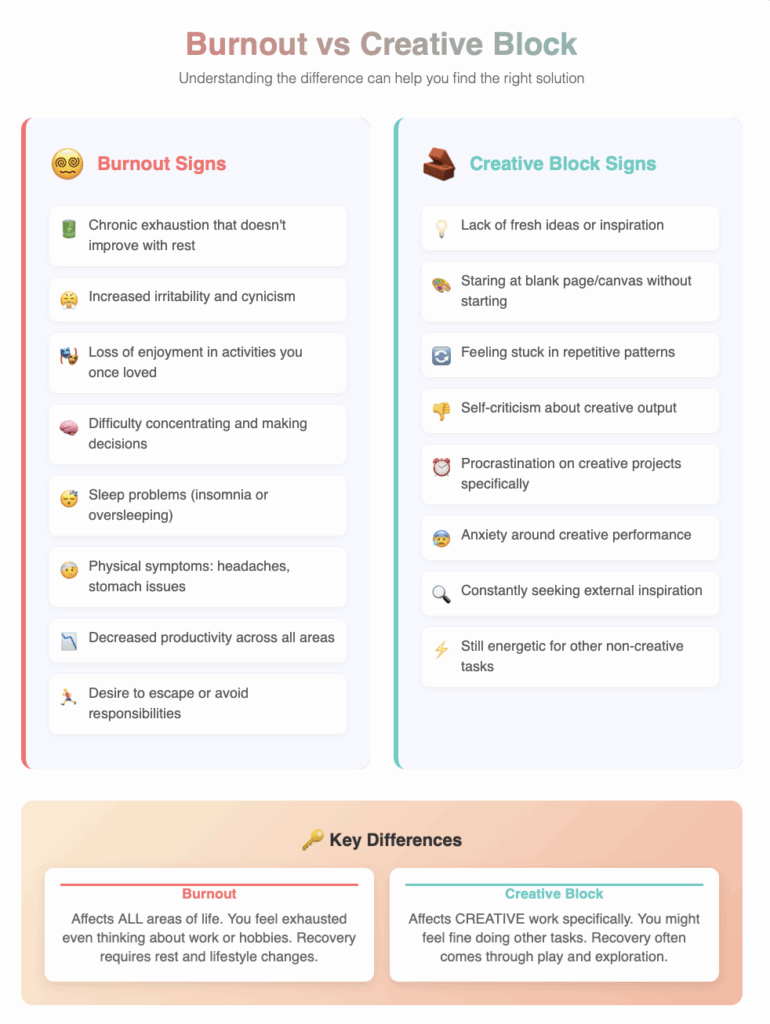
    The two often look alike on the surface. Both can leave you feeling stuck, unmotivated, frustrated, or numb. But they come from different places and they require different kinds of care.

    Understanding the distinction can help you respond more compassionately to yourself and your work.

    Creative Block: A Natural Part of the Process

    Creative block is part of the rhythm of making. It is that frustrating moment when inspiration runs dry or you hit resistance around your work. You might feel stuck on what to say, unsure how to begin, or plagued by perfectionism.

    It can come from fear, inner criticism, overthinking, or even a subconscious resistance to the vulnerability that comes with expression.

    But crucially, with creative block:

    • You still want to make something
    • You may feel anxious or frustrated about not producing
    • You may still have ideas, but feel stuck getting them out

    Creative block is like standing at a locked door. You are still reaching for the handle. There is a desire to create that is very much alive underneath the stuckness.

    Burnout: A Deeper Kind of Exhaustion

    Burnout is different. It is not just a mental fog: it is a full-body depletion. It comes when you have been operating in overdrive for too long. When your energy, motivation, and internal resources have been stretched past capacity.

    Burnout often shows up with:

    • Profound fatigue, sometimes physical and cognitive
    • Disconnection from purpose or joy in your work
    • Apathy or numbness, not just toward art but toward life
    • Health symptoms like insomnia, anxiety, or inflammation

    You might not want to create at all — not because you are scared or blocked, but because your system is in survival mode. Burnout is not a wall you need to break through. It is a signal that you need to rest.

    How to Tell the Difference in Yourself

    Ask yourself:

    • Am I tired of this specific project or everything I try to do creatively?
    • Do I still want to create, or do I feel totally shut down?
    • Is my body asking for rest? Is my mind racing or is it checked out?
    • Have I been pushing past my limits for a long time?
    • Do I need a new approach — or a real pause?

    You can also look at your past writing, sketchbooks, voice notes, or journals. You may see a pattern. Burnout often leaves breadcrumbs — subtle mentions of overwork, frustration, or health flare-ups — long before it hits full force.

    Why the Difference Matters

    If you treat burnout like a block, you’ll keep trying to force yourself into action when what you need is rest.

    If you treat a block like burnout, you may stop before pushing through a fear that could lead to growth.

    Understanding which one you are facing can help you respond with the right kind of support — gentleness, structure, boundaries, or simply time.

    You Are Not Broken

    Whatever you are feeling, it is not a failure. It is information. Your body and your creativity are in conversation with each other. You are allowed to listen.


    Curious what your own work might reveal about your creative patterns and wellbeing?

    I offer personalized, written assessments for artists, writers, and makers based on your existing blog or Substack. Through curated quotes and analysis, I’ll help you uncover the deeper connections between your health and your creativity.

    Learn more about the Art Meets Health Creative Wellness Blueprint here.

    burnout vs creative block helpful infographic chart

  • Three Years of Research, One Big Question, and What I’m Finally Ready to Share

    Three Years of Research, One Big Question, and What I’m Finally Ready to Share

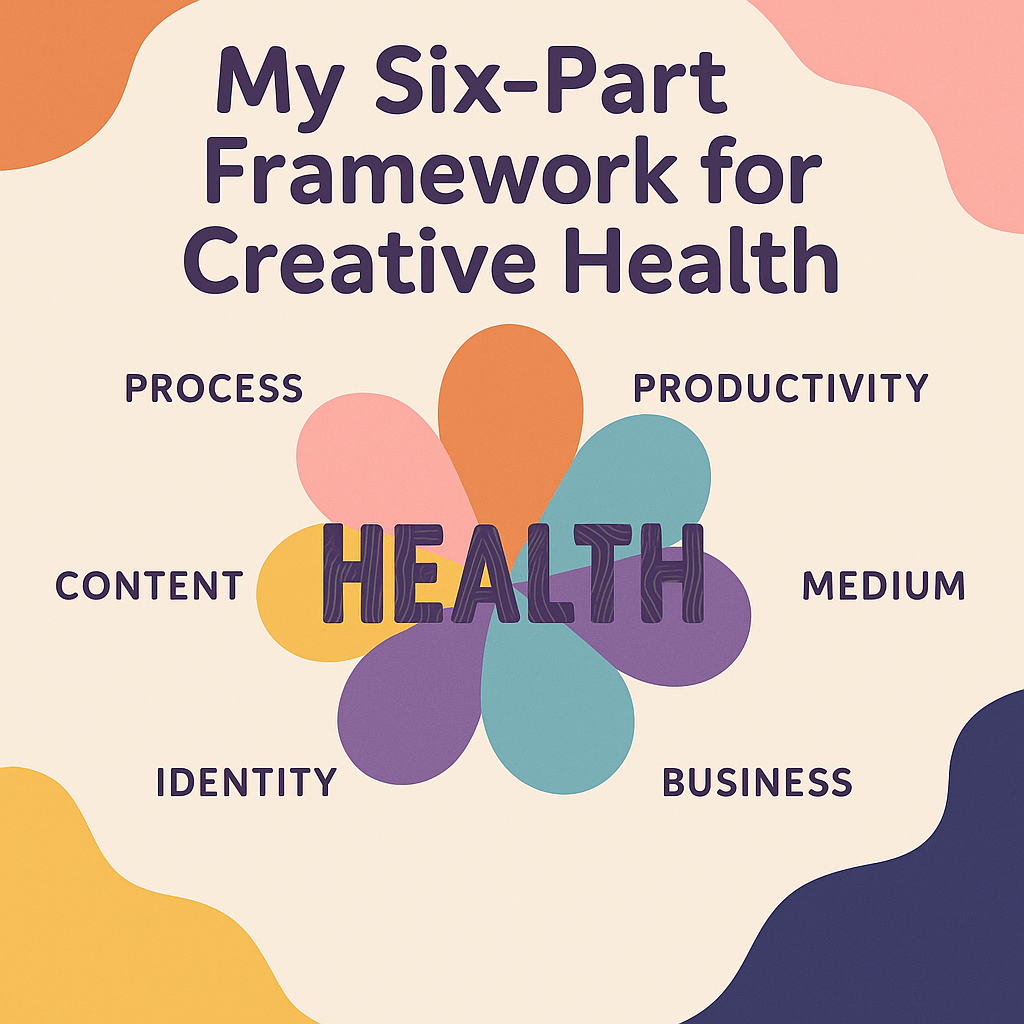
    What I Discovered After Talking to Hundreds of Creators About Health and Art: The Six-Part Framework That Changes How We Think About Creative Wellness

    For three years, I’ve been having conversations.

    With painters whose anxiety changes their color choices. With writers whose depression shifts the stories they feel compelled to tell. With musicians who can’t practice when their chronic pain flares. With photographers whose ADHD makes long projects impossible but creates magic in spontaneous moments.

    I’ve talked to fiber artists whose perfectionism paralyzes them. To sculptors who use their art to process trauma. To dancers whose bodies and minds need different things on different days. To creators who’ve built businesses around their art and struggle with the emotional labor of selling something so personal.

    And what I kept hearing, over and over, was this: No one talks about how our health (mental, physical, emotional) fundamentally shapes every aspect of our creative lives.

    The Framework That Emerged

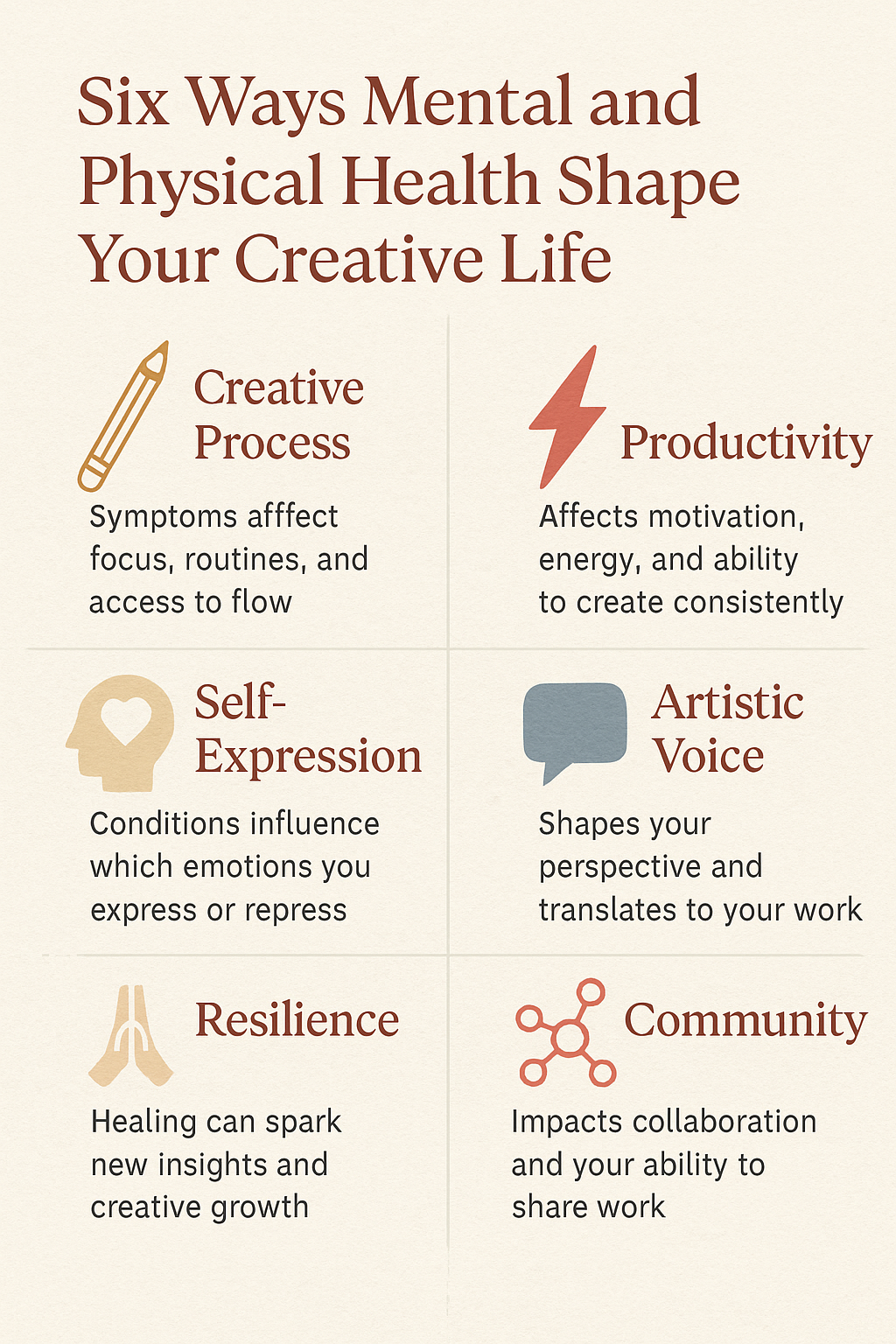
    Through all these conversations, through my own lived experience, through three years of collecting stories and patterns, I discovered that our health impacts creativity in six interconnected ways:

    1. Creative Process – How emotional regulation, energy levels, anxiety, perfectionism directly influence our flow and artistic choices
    2. Creative Content – The way our inner landscape gets reflected in themes, imagery, the stories we’re drawn to tell
    3. Creative Medium – How we choose tools and materials based on what our bodies and minds can handle, accessibility needs, sensory comfort
    4. Creative Productivity – What “getting things done” actually looks like when you’re managing mental health, chronic conditions, neurodivergence
    5. Creative Identity – How we see ourselves as artists, especially when health challenges shake our sense of capability
    6. Creative Business – The unique struggles of monetizing art while managing stigma, energy limitations, the emotional complexity of selling your soul’s work

    These aren’t separate issues. When your depression deepens, it doesn’t just affect your mood. It changes how you approach your easel, what subjects call to you, whether you can sit for long periods, how you talk about your work, whether you feel worthy of charging fairly.

    Everything is connected. And I think it’s time we talked about it.

    What I’m Launching: A 12-Month Deep Dive

    I’m working on a book about this, about the complex relationship between our health and our creativity. It follows my last book, which explored the relationship between art and mental health through art history, but this one is different. This one is about us, right now, living these realities as creators.

    And I’m going to use Substack to share chapters, insights, and supplemental materials along the way. Starting in June, we’ll dive deep into different aspects of this creative-health relationship over the course of a year. Not just theory, although some of that, but also practical, real-world stuff you can actually use.

    Think weekly blog posts that get into the nitty-gritty. Zines and workbooks that help you figure out your own patterns. Audio practices for when you need support in the moment. Resources that actually make sense for creators dealing with real human challenges.

    June: Where We Start

    We’re kicking off with “The Art-Health Connection: Emotional Regulation & Creative Process.”

    Over four weeks, we’ll dig into:

    • How your emotional state literally shapes your artistic style and choices
    • That perfectionism trap that turns creative joy into suffering (and how to escape it)
    • Why we freeze instead of flow … and practical ways to move again
    • Using emotions as raw material for art (without it destroying you)
    • When art becomes your emotional regulator (and keeping that healthy)

    Why This Matters to Me

    I’ve lived with depression for most of my adult life. I’ve watched it change my writing, my crochet, my photography, my ability to show up as an artist in the world. I’ve also watched creativity save me, anchor me, help me process things I couldn’t handle any other way.

    But mostly, I’ve felt like I was figuring this out alone. Like the relationship between my health and my creativity was this secret thing I had to navigate without a map.

    I don’t want anyone else to feel that alone in it.

    This work isn’t about “fixing” yourself so you can create better. It’s about understanding the gorgeous, complicated relationship between who you are—all of who you are—and how you make art. It’s about building practices that sustain you for the long haul, not just the next deadline.

    This Is Just the Beginning

    If you’ve ever wondered why your art changes when your mental health shifts…

    If creative blocks seem mysteriously tied to your anxiety levels…

    If you’ve felt like you have to choose between taking care of yourself and pursuing your creative dreams…

    If productivity advice always seems to ignore the reality of being human…

    Then maybe this year-long exploration is for you.

    I’m not promising easy answers. I’m promising honest conversation, practical tools, and the kind of community where these questions actually get talked about.

    I hope you’ll join me for this journey.


  • 10 Things I Thought I Knew About Being an Artist (That Changed When My Life Did)

    10 Things I Thought I Knew About Being an Artist (That Changed When My Life Did)

    myths about being a working artist

    What unlearning old creative beliefs taught me about helping others rebuild their practice

    For a long time, I carried a map of what it meant to be an artist. The map was inherited, self-constructed, shaped by culture and school and mentors and my own internal drive. It was full of clear directions. Be productive. Be visible. Be consistent. Be serious. Push through. Stay focused. I followed that map with everything I had.

    Then life changed. My health shifted. My nervous system could no longer sustain the pace I had come to believe was essential. The creative structure I had once relied on began to feel like scaffolding I could no longer stand inside. Slowly, and not without grief, I realized I had to draw a new map.

    These are ten beliefs I used to hold as an artist—each one now softened, reframed, or released. And through the process of letting go, I found not only a new way of working, but a desire to help others through that same kind of redefinition. The framework I use now with clients came directly from navigating this terrain myself.

    1. I thought being an artist meant creating every day

    There was a time when I believed that showing up daily was the cornerstone of creative legitimacy. I kept notebooks full of word counts and streaks. Even when I was tired or disconnected, I pushed myself to do something. At first, that structure gave me confidence. Eventually, it gave me burnout.

    When chronic symptoms disrupted my routine, I felt like I was losing part of myself. I had to learn that creativity is not always loud or linear. Sometimes it is quiet and cyclical. Sometimes it lives in thinking, or noticing, or resting. I do not create every day anymore. But I still consider myself fully engaged.

    This shift made me think differently about the “process” category of my framework. So many people come to me struggling with what used to work but no longer does. Together, we redefine what consistency actually looks like when your body or life changes.

    2. I thought slower work was less valuable

    Speed was once my favorite validation. I loved being fast. I loved finishing things quickly. I believed that momentum was a sign of mastery. But when my energy became unpredictable, I could no longer rush. I had to slow down, not as a choice, but as a condition of survival.

    At first, I felt shame. Then I started to notice something else. The slower I moved, the more depth the work contained. I gave things time to breathe, and they became richer. What I once dismissed as delay was actually refinement.

    I now help clients understand the difference between speed and meaning. In the productivity section of my framework, we explore what creative effort looks like when you stop measuring it by pace.

    redefining the value of procrastination

    3. I thought productivity equaled worth

    I based my sense of value on output. The more I produced, the more I believed I mattered as an artist. My notebooks, my blog posts, my drafts—all of it fed a quiet fear that if I stopped creating, I would stop existing in the eyes of others.

    That belief collapsed when my body began saying no. I was exhausted. I could no longer make in the same volume. I worried that I had disappeared. But something else emerged. Presence. Intention. Instead of trying to produce endlessly, I began choosing what truly mattered. My identity as an artist no longer hinged on quantity.

    When I work with others now, this is often the place where the grief sits. Letting go of externalized productivity as identity is not easy. But it makes space for a more humane and sustainable practice.

    4. I thought discipline was always the answer

    I have always been a planner. I believed that if I could create the right system, I could write or make through anything. When I struggled, I doubled down on structure. But discipline is not a universal solution. Sometimes it becomes a form of control. Sometimes it hides fear.

    Eventually, I realized that I was using discipline to avoid feeling vulnerable. I was pushing when I needed to soften. What I needed was trust, not force. I needed to believe that the work would come when I was ready, and that it did not need to be extracted.

    This distinction between rigidity and devotion comes up often in session. In the process and sustainability sections of the framework, we look at how structure can support rather than dominate the creative life.

    5. I thought rest had to be earned

    For a long time, I did not let myself rest unless I had finished something. Rest was the reward. If I had not done enough, I did not deserve to pause. That mindset led directly to physical collapse.

    Rest is not a reward. It is part of the creative ecosystem. Without rest, the nervous system cannot return to regulation. Without regulation, creation is a threat rather than a refuge.

    This realization changed my understanding of the entire creative cycle. I now speak openly with clients about rest as a foundation for sustainability. Your body does not need to justify its needs. You do not have to prove your way into rest.

    6. I thought I had to specialize

    For years, I believed I needed to choose one thing and commit to it completely. I saw multidisciplinary creativity as scattered. But I am not a single-medium artist. I write, I stitch, I collage, I facilitate, I reflect. And all of it feeds the rest.

    My creative identity did not fracture when I expanded. It became whole. The modality section of my framework reflects this deeply. When clients feel stuck, we explore what form wants to emerge, even if it is unfamiliar.

    Sometimes a shift in material is what brings someone back to themselves.

    creative identity

    7. I thought sharing was part of the work

    I used to believe that art was not complete until it had been seen. I pushed myself to publish everything, post everything, put everything into the world. But not all work is meant for an audience. Some things are private. Some things are sacred.

    Now I keep more to myself. I create for the act of making, not the reaction it might generate. This shift has been profoundly freeing. Visibility is no longer a requirement. It is a choice.

    Many of my clients are healing from the expectation that art must be performative. We unpack that belief and find other ways to feel connected.

    8. I thought clarity came first

    I wanted to understand what the work was about before I began. I waited for a clear thesis, a defined purpose. But I no longer begin with knowing. I begin with curiosity. I follow the material.

    Most meaningful work reveals itself in process, not before. Learning to create without control has made my work more honest. In the content and identity sections of my framework, I help people stay present with uncertainty.

    Sometimes the work is not about knowing. It is about asking.

    9. I thought I had to stay the same

    I resisted change. I believed that if I shifted too much, I would lose the core of who I was. But that resistance was a form of fear. I was trying to preserve a self that no longer fit.

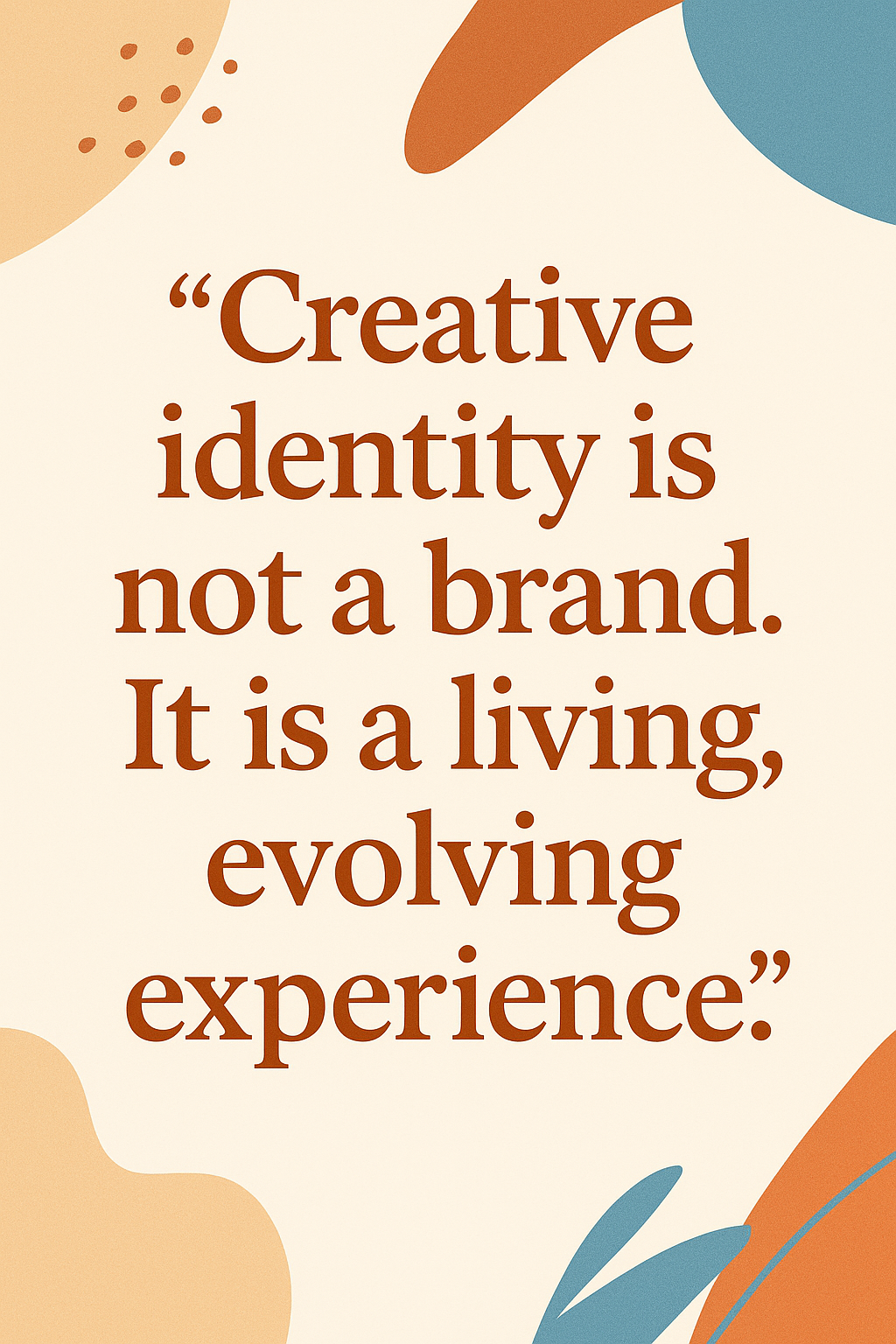
    Creative identity is not a brand. It is a living, evolving experience. I no longer cling to consistency. I allow for contradiction. I allow for change.

    This belief is central to my client work. When people feel like they no longer recognize themselves in their work, we use this as a beginning, not an ending.

    10. I thought art had to be separate from healing

    I kept my therapeutic work in one room and my creative work in another. I worried that if I merged them, I would lose the integrity of both. But that separation was artificial.

    My most meaningful work has always come from the places I needed to heal. And helping others reconnect with their creative self through psychological insight and gentle conversation has become the most integrated form of my artistry.

    This is why I offer the sessions I do now. My six-part framework is not just a coaching tool. It is a reflection of everything I had to unlearn and rebuild in my own practice. It is how I hold space for artists who are finding their way back to themselves.

    Book a Creativity Session

    Your creative life can change. And it can still be yours.

  • A Framework for Creative Health: Six Dimensions of Insight and Reconnection

    A Framework for Creative Health: Six Dimensions of Insight and Reconnection

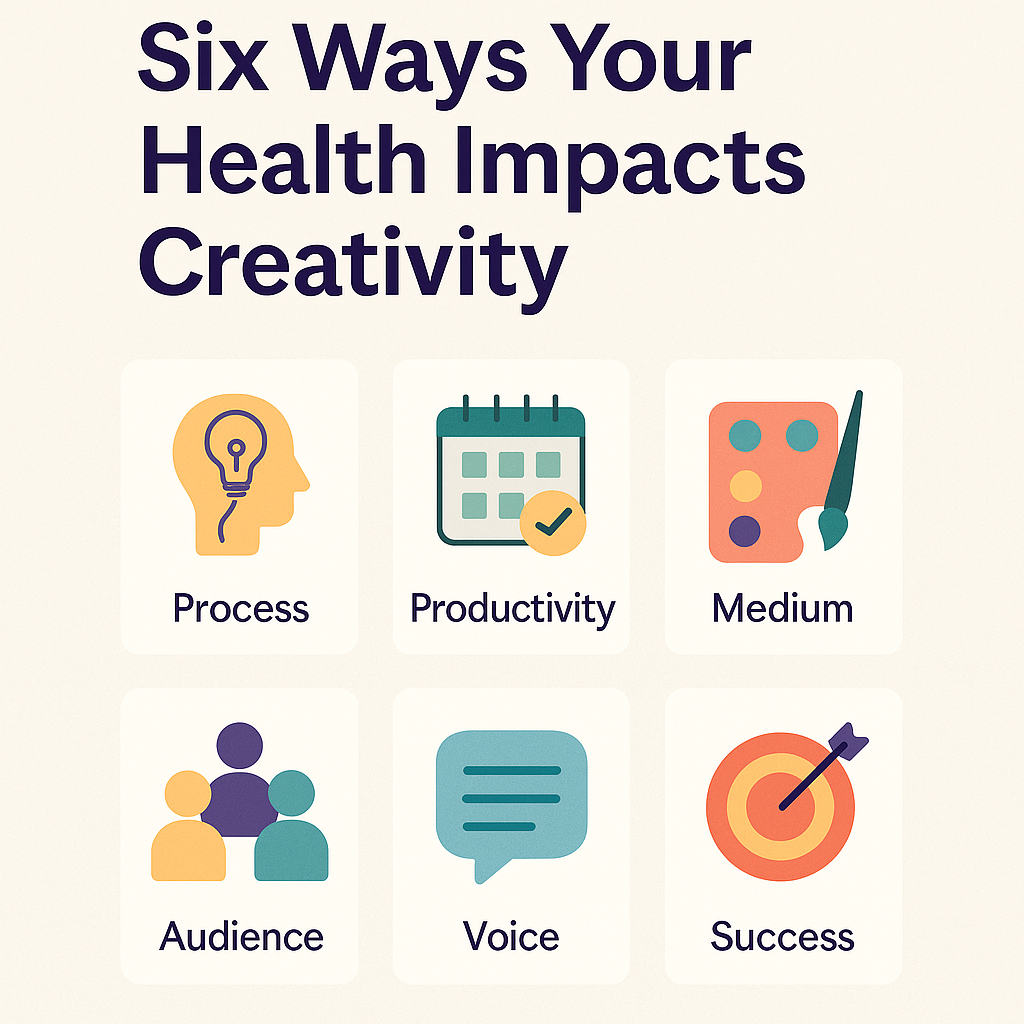
    six ways health impacts art

    When creatives come to me feeling blocked, inconsistent, or confused about who they are in their work, what we uncover is often far deeper than a temporary disruption in motivation. What we are seeing is a change in creative health—an interwoven network of patterns, needs, and beliefs that shape how a person relates to their art. This six-part framework offers a reflective structure to help name and explore these changes. Each domain is a point of inquiry, not a diagnostic category. The purpose is not to fix what is not working, but to understand what the work is responding to.

    1. Creative Process

    This refers to the how of your work. How do you approach making? What rhythms, rituals, or environments support your ability to enter a creative state? For many people, process becomes a source of anxiety when old methods stop working. Maybe you used to thrive on early mornings or long uninterrupted stretches, but now your health, schedule, or cognitive patterns require shorter, less structured sessions. This does not mean you are less committed. It means your process is asking to be reconfigured in a way that honors your current reality.

    2. Productivity Patterns

    Here we explore the when and how much. Creative identities are often tied to output, but this framing can collapse under the weight of chronic illness, burnout, or shifting priorities. Are you expecting yourself to work at a pace that no longer matches your capacity? Are you equating slow periods with failure? Noticing the mismatch between expectation and ability is essential. Productivity is not a measure of worth. It is a reflection of energy, accessibility, and alignment.

    3. Medium or Modality

    Sometimes the work itself wants to change form. This might mean shifting from writing to movement, from performance to collage, or from digital to tactile materials. These changes are not arbitrary. They reflect subtle psychological needs—whether for containment, expression, safety, or control. In my own experience, I have turned to fiber arts when language felt too sharp. Stitching became the way I reentered creative space when words could not yet hold what I was feeling. When your primary medium no longer feels accessible, it may be time to ask what your nervous system is reaching toward instead.

    4. Creative Content

    This is the what of your work. What themes or truths are you exploring, and have those themes shifted? Many creatives experience discomfort when they no longer feel drawn to the same subjects. They may feel bored, emotionally distant, or even resistant to what they once felt called to express. This is natural. We change. Our stories deepen or move. Allowing your content to evolve can feel risky, especially if your public identity has been tied to a particular genre or topic. But that evolution is often where your most honest work begins.

    5. Self-Perception

    This domain focuses on how you see yourself in relation to your creativity. Do you still identify as an artist, a writer, a maker, if you are producing less or working differently? Many clients carry shame around changing output or style because they have internalized narrow definitions of what it means to be a real creative. Revisiting and updating those definitions is often the most healing work we do. You are not required to create in the same way forever in order to be legitimate. You are allowed to shift and still belong to your creative identity.
    6. Sustainability and Long-Term Support

    Finally, we look at whether your creative life is built in a way that supports longevity. Can you keep doing what you are doing without crashing? Are your systems, boundaries, and goals aligned with your physical and emotional health? This is often the point where the body speaks loudest. A sustainable practice is one that leaves room for fluctuation, for illness, for grief, and for joy. It does not ask you to be consistent above all else. It asks you to be honest, supported, and resourced.

    Want to work on this with me? Book a session now.

  • 5 Psychological Ways of Understanding Creative Blocks … and One Framework To Help You Through It

    5 Psychological Ways of Understanding Creative Blocks … and One Framework To Help You Through It

    5 Psychological Ways of Understanding Creative Blocks

    Exploring theory-informed insights and a practical method for working with creative resistance

    Creative blocks are widely misunderstood. Many people assume they result from lack of motivation, poor planning, or internal resistance. But beneath the surface, creative disconnection often holds layers of psychological meaning. What appears to be procrastination may in fact be a signal from your nervous system or subconscious, pointing toward unresolved stress, misaligned expectations, or outdated creative frameworks.

    In this article, we explore five psychological perspectives that help explain why creativity sometimes shuts down, even for highly engaged and experienced artists. Each perspective offers a unique lens. Together, they can deepen your understanding of what your “block” might actually be trying to tell you. And at the end, I’ll introduce a reflective framework I use with clients to help them reenter their creative work gently, rather than forcing their way through it.

    1. The Block as a Protective Freeze Response

    From a somatic psychology perspective, a creative block may be the result of the body entering a freeze state. This occurs when the nervous system perceives a threat—emotional, psychological, or physical—and responds by immobilizing activity. Rather than fighting or fleeing, the body shuts down engagement. This is often experienced as numbness, brain fog, dissociation, or an inability to initiate.

    In creative practice, freeze can show up as looking at your tools and feeling nothing. It may be difficult to describe. You are not consciously avoiding the work. You are simply unable to approach it. Understanding this as a physiological response, rather than a character flaw, is an essential step toward recovery.

    2. The Block as Unconscious Content Regulation

    Psychoanalytic theory views blocks through the lens of repression and defense. When creative work comes close to accessing painful or unresolved content, the unconscious mind may intervene to stop the flow. In this view, the block is not a failure of creativity. It is a protective boundary between you and something you are not ready to integrate.

    For example, someone working on a memoir might suddenly lose interest in the project as they approach a difficult memory. Or a poet may feel blank when trying to write about loss. These interruptions are not random. They signal areas where care, processing, or containment is needed before the work can continue.

    5 Psychological Ways of Understanding Creative Blocks

    3. The Block as Learned Avoidance

    From a behavioral perspective, creative inhibition can be shaped by past reinforcement. If past efforts were met with criticism, embarrassment, or emotional distress, the brain may begin to associate creative action with discomfort. Over time, avoidance becomes a learned coping strategy. You begin to protect yourself by staying away from the source of perceived pain—even if that source is something you love.

    This theory highlights how the creative process is shaped not only by internal desire, but also by external feedback and memory. Understanding the origin of these associations can help interrupt the cycle and reframe your creative experience in safer, more compassionate terms.

    4. The Block as Identity Disruption

    Many blocks are not about the work itself, but about the person who is trying to make it. When your identity shifts—due to illness, grief, aging, professional changes, or personal growth—you may no longer recognize the voice or purpose that once drove your creativity. This leads to a kind of rupture, not just in your routine, but in your understanding of what the work is for.

    Someone who used to thrive on deadlines may no longer have the capacity to sustain that pace. Or someone who built their creative life around audience feedback may no longer find that external validation meaningful. The block, in this case, is a signal that your creative self is evolving and needs new language, rhythms, and structures to support it.

    5. The Block as Burnout, Not Blockage

    Sometimes what we name as a block is actually burnout. Emotional, mental, and sensory fatigue can dull your access to creativity. You may still care about the work, but the energy required to engage with it has been depleted. Burnout often follows prolonged overexertion, especially in fields where creative labor is expected to be constant, visible, or monetized.

    Burnout is not just exhaustion. It also includes disconnection, cynicism, and the sense that your work no longer matters. In these moments, trying harder does not help. Recovery depends on rest, boundary-setting, and reorienting toward creative practices that replenish rather than drain.

    5 Psychological Ways of Understanding Creative Blocks

    One Framework That Helps: The Six Dimensions of Creative Health

    In my work with clients, I use a reflective framework that helps us explore what is happening beneath the surface of creative silence. It includes six dimensions where health impacts creativity. These are:

    Process: How you approach the act of making
    Productivity: How much you can produce, and at what pace
    Medium: What tools, forms, or methods feel accessible
    Content: What subjects feel possible to explore
    Self-perception: How you view yourself when not actively creating
    Sustainability: Whether your practice can continue without burnout

    When someone comes into a session saying they feel blocked, we often discover that one or more of these dimensions has shifted due to changes in health, identity, or circumstance. The framework helps us move away from shame and toward understanding. Instead of asking, “Why can’t I just do the work?” we ask, “What is different in my internal or external world that the work is responding to?”

    This reframing is powerful. It allows for care. It allows for creativity to return when it is ready. And it allows the person to remain in relationship with their practice, even if they are not actively producing.

    If you would like help exploring your own creative silence, I offer one-on-one support grounded in psychological insight and lived understanding. This is not a place for fixing. It is a space for listening and re-entry.

    Book a Conversation Today

    Your block is not a problem to eliminate. It is a signal worth understanding.

  • 10 Signs My Approach to Creativity and Health Guidance Is Right for You

    10 Signs My Approach to Creativity and Health Guidance Is Right for You

    is my approach right for you?

    A relationship-centered alternative to traditional coaching for artists and writers in transition

    There are many options for creative support. Some focus on structure and accountability. Others emphasize productivity or performance goals. What I offer is something different.

    This is support rooted in awareness. It honors your body, your creative process, your mental health, and your energy. The work is slow, reflective, and designed to hold what traditional coaching often overlooks.

    If you have been trying to create something meaningful while also navigating illness, burnout, grief, or emotional change, this approach may be the kind of care you have been seeking.

    Here are ten signs that working together could be a good fit.

    1. You are not looking for accountability. You are looking for alignment.

    You have already tried pushing through goals. Maybe you even reached them. But something still feels off. You don’t need someone checking your deadlines. You need someone helping you reconnect with what actually matters to you now, so that your creative life begins to feel honest again.

    2. You have tried conventional productivity tools and they do not work for you.

    Bullet journals, time blocks, habit trackers, and apps may have failed you or never quite fit in the first place. You are not unmotivated. You have a body or mind that works differently. You want guidance that respects your reality and helps you build a process that works with you instead of against you.

    3. You are grieving.

    Grief alters your relationship with your art. Your voice may feel muted or too raw to access. You do not want to be pushed through it. You want someone who can sit with the grief, make space for it, and help you carry it creatively, without pressure or expectation.

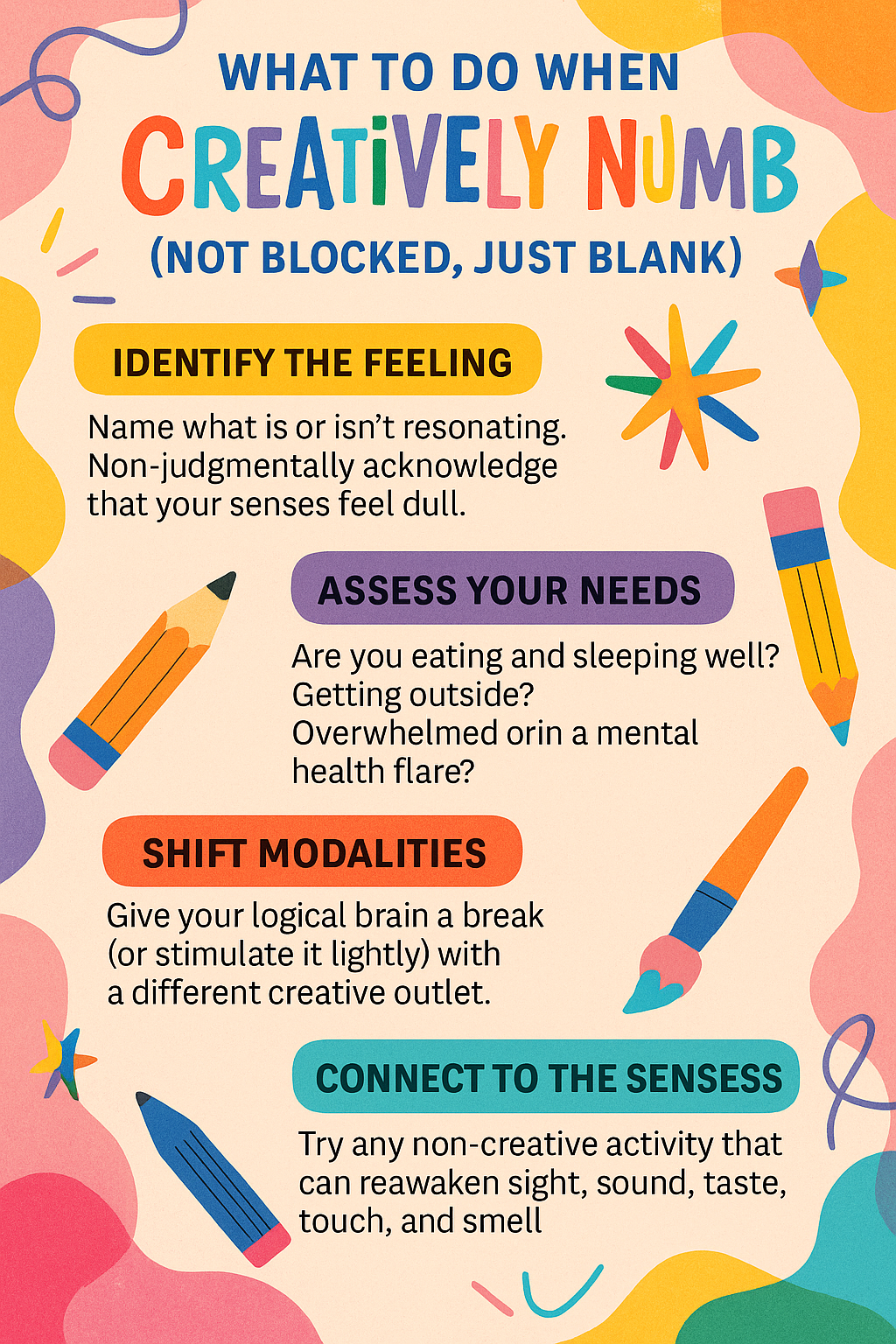
    4. You feel creatively blank instead of blocked.

    There is a difference between resistance and disconnection. You are not stuck in the usual sense. You feel numb. You look at your materials or screen and feel nothing. You are not in crisis, but you are not okay either. You are ready for someone to meet you there and help you gently begin again.

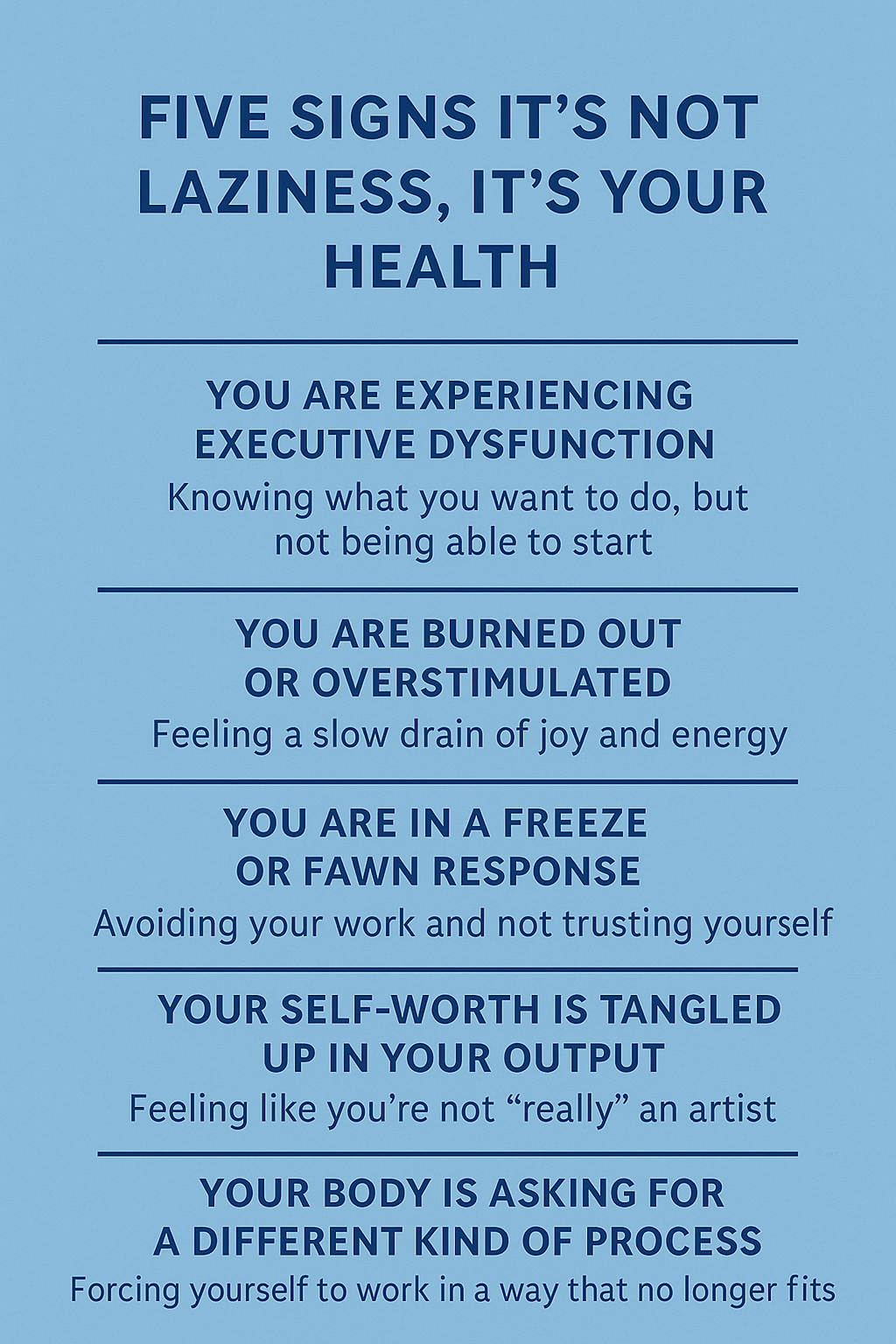
    5. You have been calling yourself lazy, but you suspect that is not the full story.

    You have absorbed language that makes you feel like a failure. But deep down, you sense something else. You may be in a freeze state, emotionally overwhelmed, or unconsciously protecting yourself. You want a space where you can explore this with honesty and care.

    6. You have outgrown your own expectations.

    The routines that once helped you are no longer a fit. You are not trying to be the person who created every day without pause. Something in you has changed, but your creative systems have not caught up. You want to work in a way that reflects who you are now.

    7. You are a helper or therapist who wants to reconnect with your own creativity.

    You know how to hold space for others. You do it every day. But your own creative voice has been set aside. You want a space where you can receive support, where your needs and your stories matter just as much as the people you care for.

    8. You care more about sustainability than output.

    You are done chasing volume. You want a practice that lasts, one that supports you through illness, fatigue, or change. You want to work when you can and rest when you need to, without guilt. You are ready to define success on your own terms.

    9. You feel creatively alone.

    Maybe the people around you do not understand. Maybe they talk about goals and deadlines, but never the emotional side of making things. You want to be in conversation with someone who understands the quiet, the isolation, and the complexity of the creative process.

    10. You want support that is soft, smart, and real.

    You are not looking for hype. You are looking for honesty. You want to be asked thoughtful questions. You want to work with someone who sees your full self … not just the artist, not just the output, but the whole person behind the practice.

    This is the space I offer. We begin wherever you are. We talk about what is real … your health, your nervous system, your fear, your fatigue, your desire. We move from there.

    Book a Creativity Guidance Session Today

    You are not behind. You are not broken.
    You are allowed to ask for the kind of support that actually fits your life.

  • When Your Creativity Feels Far Away

    When Your Creativity Feels Far Away

    help for creative burnout

    Listening to what your body is trying to tell you when the work no longer feels close

    You used to reach for your notebook without thinking.
    You used to feel something—excitement, fear, urgency—when an idea landed.
    Now? You’re just tired. Blank. Still.

    The spark feels far away, and no matter what you do, it doesn’t come back.

    Maybe you’ve tried to name it. Burnout. Block. A bad season.

    But maybe the name isn’t the point.
    Maybe your body is trying to say something that no label can quite hold.

    The Body Keeps the Creative Score

    Sometimes we think we’re not making art because we’re distracted or lazy.
    But what if it’s deeper than that? What if it’s physical?

    When your nervous system shifts into freeze or shutdown, it can look like disinterest or creative detachment.
    You’re not pushing things away. You just can’t reach for them anymore.

    This is not resistance. It’s a form of self-protection.

    I have lived in that place—where every part of me wanted to return to writing but my body refused. Where I felt shame for not doing enough, while quietly forgetting that I had survived things I hadn’t yet processed.

    I now understand that what I called burnout was sometimes grief. Sometimes fawn. Sometimes a long-overdue request for slowness.

    This is one of the first things I explore with people in my sessions.

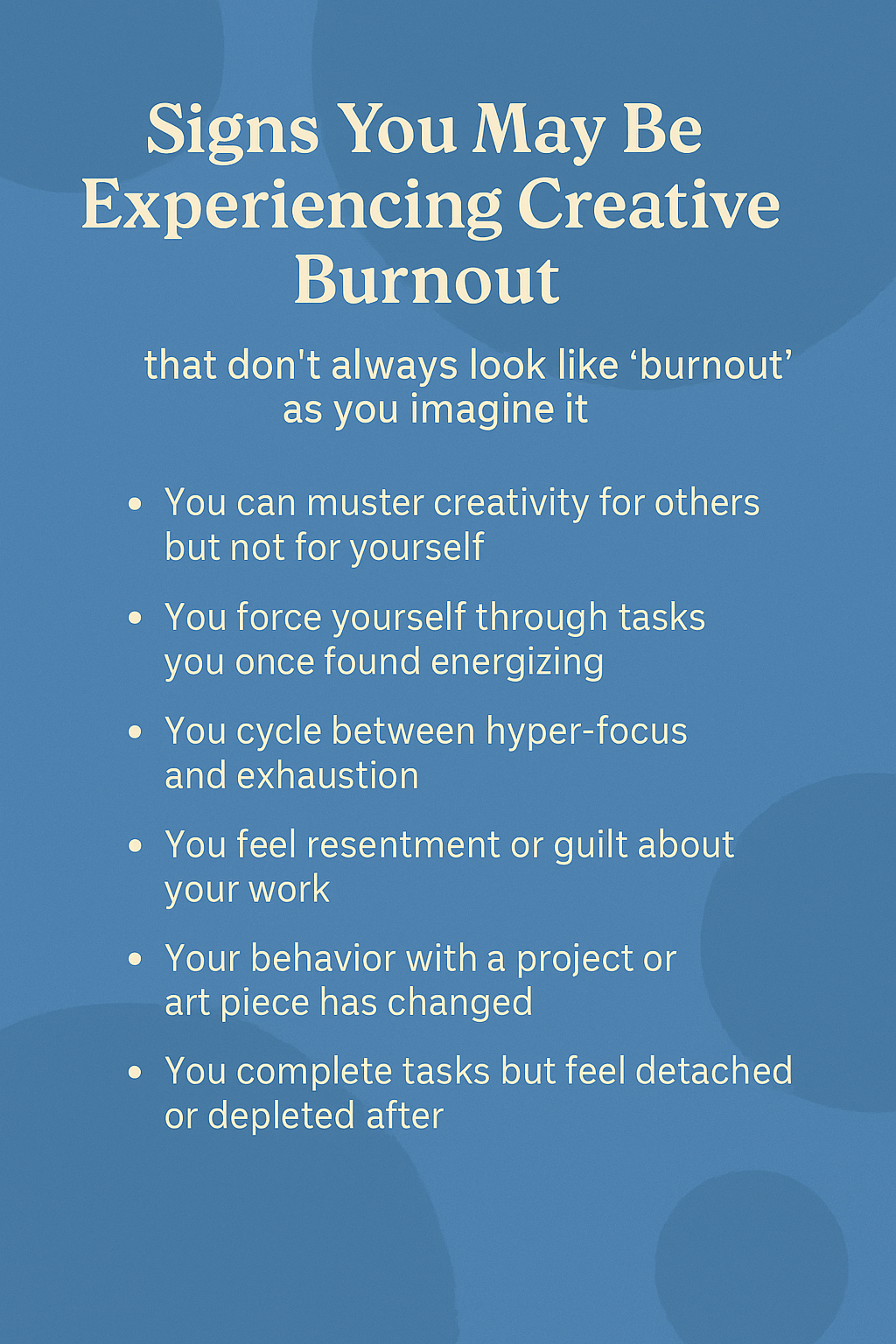
    signs of creative burnout

    It’s Not Always Burnout (Even If It Looks Like It)

    When creativity disappears, we assume we need rest or inspiration.
    Sometimes, we do.
    But other times, what we need is to feel safe enough to come close to our own voice again.
    Some signs this might be something other than creative burnout:

    • You feel emotionally flat, rather than frustrated

    • You avoid your materials completely, rather than trying and stopping

    • You feel like you’re moving through fog, not fatigue

    • You keep making things but feel disconnected from them

    • You feel guilt, shame, or confusion about not caring anymore

    If you’ve said “I don’t feel like myself lately,” that’s not something to fix. It’s something to honor.

    What I See in the Sessions I Hold

    Many of the people I work with arrive thinking they’re unmotivated.
    They’re not.

    They’re emotionally overwhelmed
    They’re exhausted from masking
    They’re afraid that creating again will open something raw
    Or they’re waiting for someone to say: You are still an artist, even like this

    My sessions are not about solving the problem.
    They are about listening for the thread that still connects you to your creative self.
    They are about remembering that slow, quiet beginnings still count.

    You Are Not Broken

    You are not broken.
    You may be in freeze.
    You may be living with invisible illness.
    You may be carrying stories that your nervous system is still trying to keep you safe from.
    You may simply be tired.

    But your art is still there. And there are still ways back.

    Book a Session Now

    You don’t have to know where to start.
    You just need someone who knows how to listen.

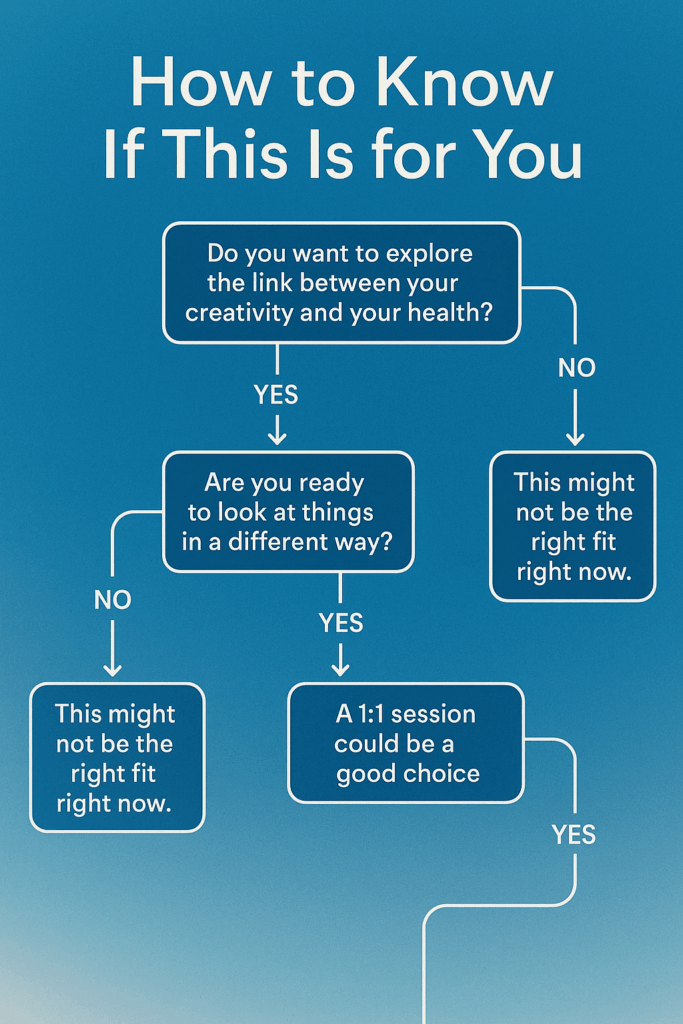
  • What Happens in a 1:1 Creativity and Wellness Session?

    What Happens in a 1:1 Creativity and Wellness Session?

    Support for artists, writers, and creatives navigating change, disconnection, or burnout

    My 1:1 sessions are designed for people whose creative work has been impacted by health, trauma, burnout, or identity shifts. These sessions are a space to pause, reflect, and re-enter your creative life with clarity and care.

    Here’s what to expect.

    Who the Sessions Are For

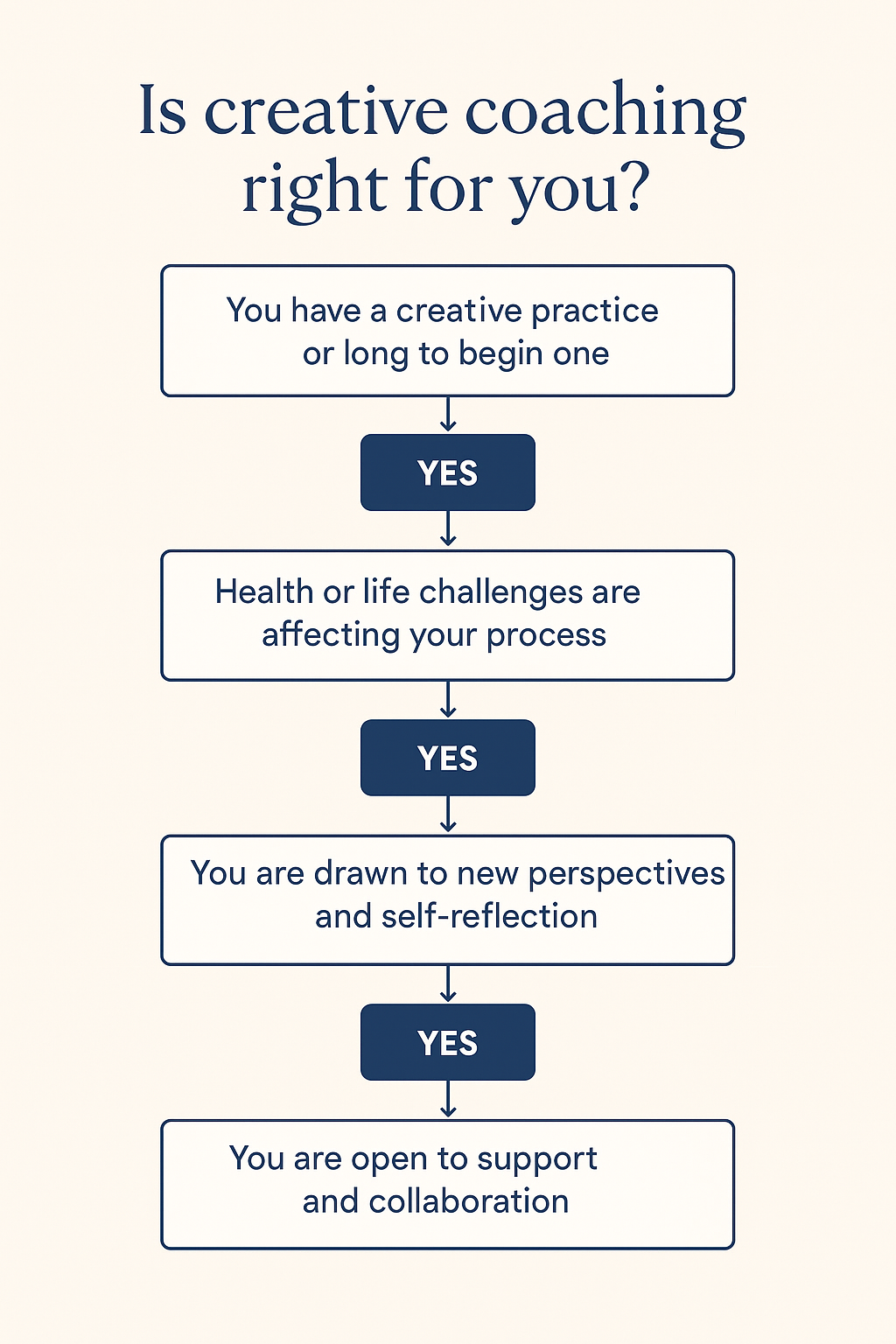
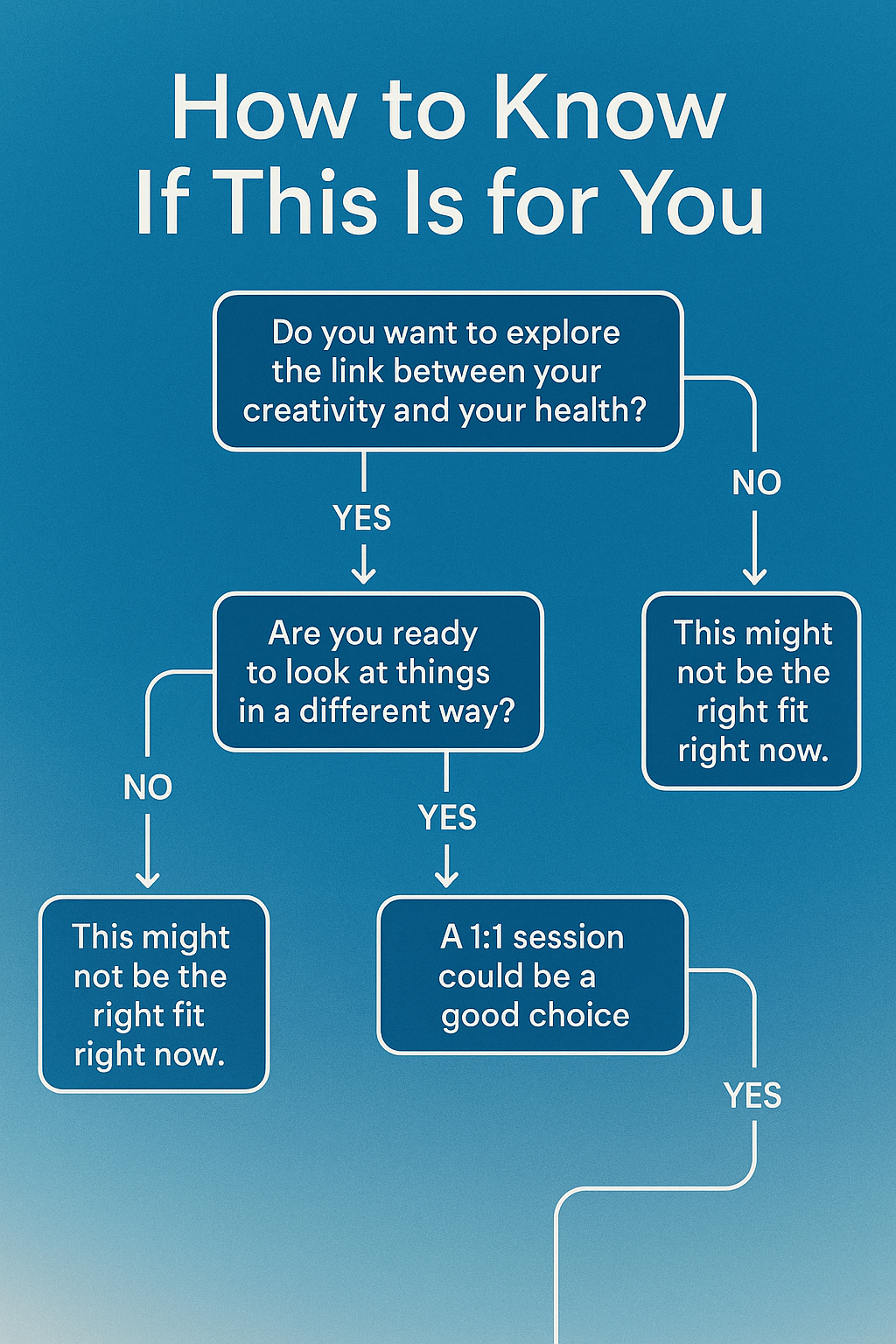
    is creativity coaching for you

    These sessions are ideal for:

    • Creatives who feel disconnected from their work or voice

    • Artists navigating chronic illness, grief, or life transition

    • Neurodivergent writers who need rhythm, not rigidity

    • Therapists or helping professionals ready to focus on their own creative process

    • Anyone burned out by hustle culture who wants a more sustainable way to create

    You don’t need to be producing consistently. You don’t need a portfolio or a goal. You only need a desire to reconnect with your creative self.

    What Makes These Sessions Different

    This is not a productivity session. It is not therapy. It is also not traditional coaching.

    Instead, this is creative space informed by:

    • My background in psychology and expressive arts

    • My research in craft as healing

    • My lived experience with chronic mental health conditions

    • My years of working with writers, makers, and sensitive creatives

    I work at the intersection of creativity and health. I hold space that acknowledges the body, the nervous system, and the emotional reality of making things while living through difficult seasons.

    what is a creative guidance conversation

    What Happens During the Call

    Each session is 60 minutes via Zoom.

    We begin with a gentle check-in. I might ask where you are in your process, or what’s been feeling hard or heavy. We explore patterns, pace, and pressure. We talk about what’s been lost, what still feels true, and where you want to go next.

    You are invited to speak freely. You can show up messy, uncertain, vulnerable, or quiet. These sessions are not about performance. They are about presence.

    Most sessions end with a reflection or small creative next step, tailored to your real life and energy.

    What You Leave With

    • Language for what’s been happening in your creative life

    • Tools or practices to support your current capacity

    • A sense of validation and calm

    • Gentle guidance instead of pressure

    • A clearer understanding of how to keep moving, even when the pace is slow

    How to Get Started

    You can book directly through the link below. I’ll send a short intake form beforehand, just to get a sense of where you are.

    📅 Schedule Your Session
    📩 Questions? Email me: [email protected]

    You do not need to wait until things feel easier.
    We can begin from where you are.

  • Creative Procrastination Isn’t a Problem

    Creative Procrastination Isn’t a Problem

    Why delaying your creative work is often a form of intelligence, not failure

    Why delaying your creative work is often a form of intelligence, not failure

    Procrastination is one of the most common concerns creatives bring into my sessions.

    “I don’t know why I keep avoiding this project.”
    “I’ve been staring at the same page for weeks.”
    “I want to make something, but I can’t get started.”

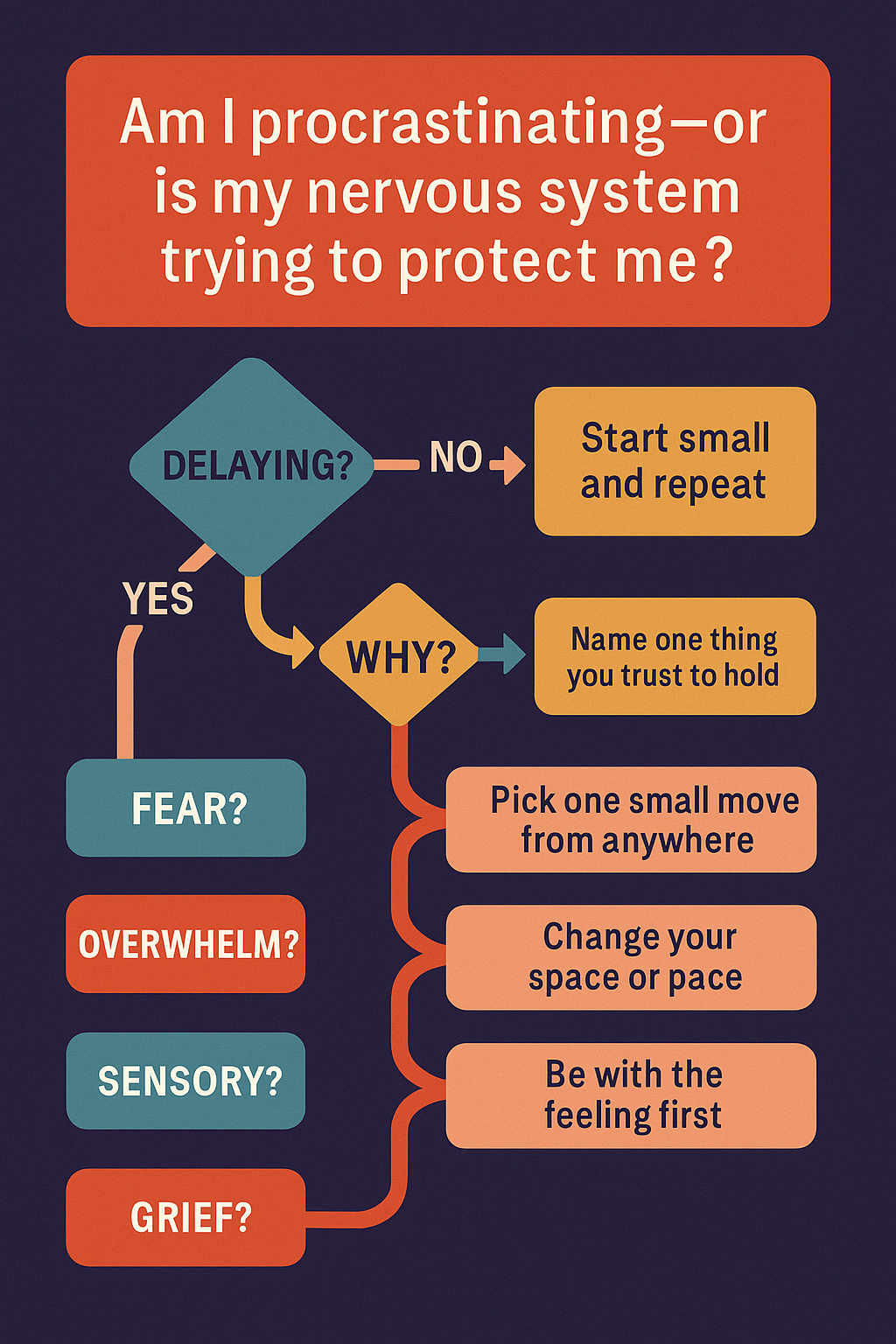
    In creative culture, and especially in professional spaces, procrastination is often framed as laziness or resistance. But what I’ve found, both in my own work and with the artists and writers I support, is that procrastination is rarely the real issue. It’s a signal. A protective strategy. A nervous system adaptation trying to help.

    In other words, creative procrastination isn’t a problem. It’s a pattern. And like all patterns, it can be understood, honored, and reworked into something more aligned.

    Why Creatives Delay (Even When They Care Deeply About the Work)

    When someone delays creative work, it’s usually for one of the following reasons:

    • Their nervous system doesn’t feel safe enough to begin

    • Their perfectionism has overridden their sense of play

    • Their internal critic is louder than their curiosity

    • Their body or mind is in a state of overwhelm, freeze, or fawn

    • The emotional cost of starting feels too high to risk

    These reasons are not excuses. They are context. They often originate from lived experiences of trauma, burnout, rejection, or identity suppression.

    Procrastination, in these cases, is the body’s way of saying:

    “This might hurt. I’m not ready. Please wait.”

    That message deserves respect. It also deserves tools that help creatives move forward at a pace that doesn’t trigger collapse.

    procrastination and creative productivity

    The Role of the Nervous System in Creative Avoidance

    Many of the creatives I work with live with chronic illness, neurodivergence, or trauma histories. Their nervous systems are not always operating in the background. Often, they are central players in how (and when) creative work gets done.

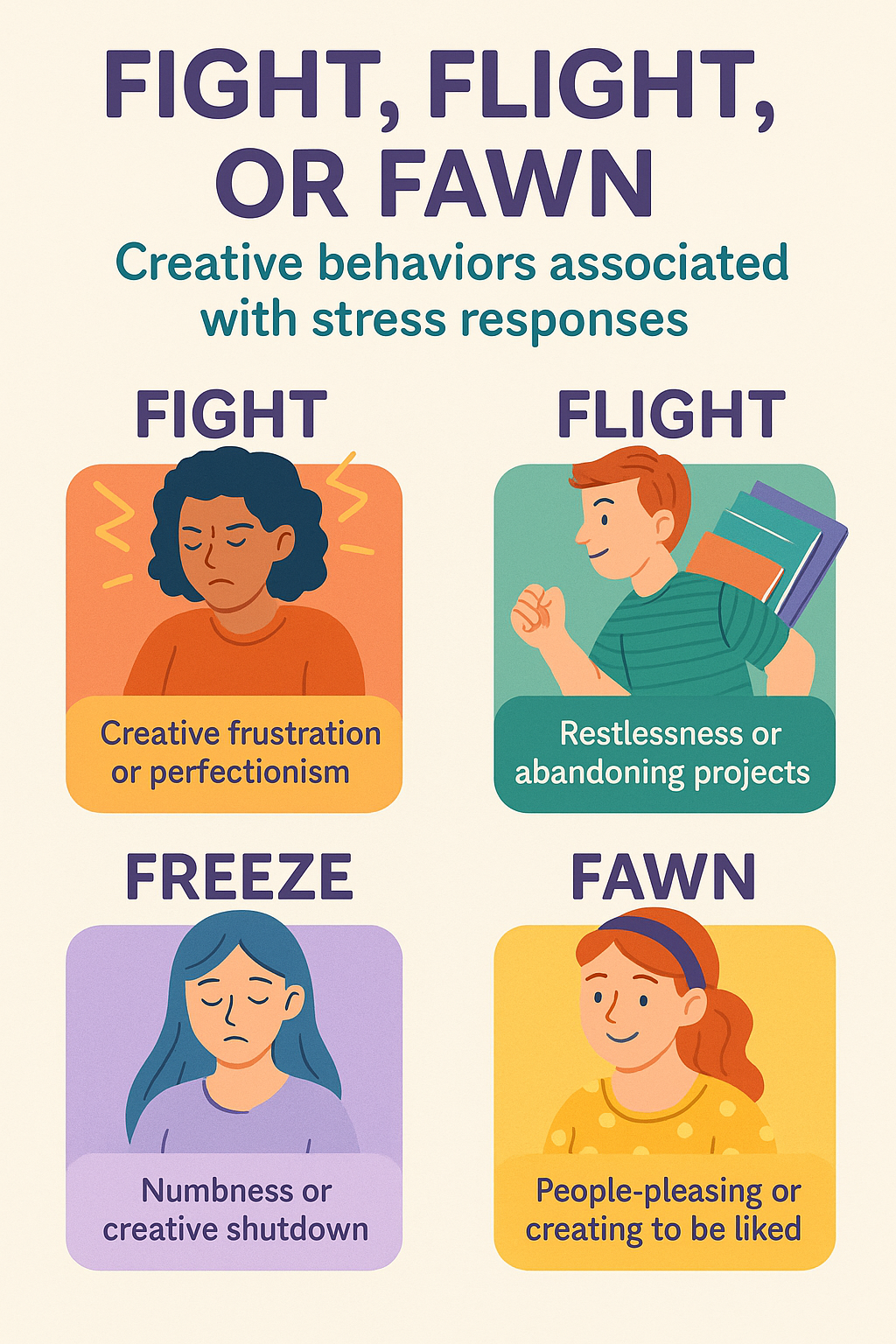
    A person in fight or flight may push themselves through deadlines, then crash.
    A person in freeze may go numb and call it laziness.
    A person in fawn may agree to projects they cannot complete without depletion.

    Understanding these patterns allows us to reframe procrastination. It is not resistance to creativity. It is an attempt to regulate safety. And once that need is recognized, the solution is not to push harder. It is to meet the body where it is.

    A More Helpful Question Than “Why Am I Delaying?”

    Instead of asking “Why can’t I just do it?” I help clients ask:

    • What does this delay protect me from?

    • What would I need to feel safe enough to start?

    • What does the task represent emotionally?

    • What is the smallest first step that feels accessible?

    • Can I approach this as an experiment, not a test?

    Often, these questions uncover deeper creative truths. They also create pathways back to the work that are grounded in care, not pressure.

    procrastination isn't a creative problem

    What This Means for You or Your Clients

    If you are a creative person who struggles with procrastination, or if you support people who do, consider this:

    You may not need to fix the delay.
    You may need to understand the story behind it.
    And once that story is named, the work can begin—gently, differently, and in your own time.

    In my 1:1 Creativity and Wellness Sessions, we explore the emotional, psychological, and physical context of your creative life. We look at where avoidance shows up, what it is trying to do for you, and how to shift it without shame. This is not productivity coaching. It is permission to return to your work with softness and strategy.

    Book a Call Today

    You do not have to push through. You just have to begin where you are.

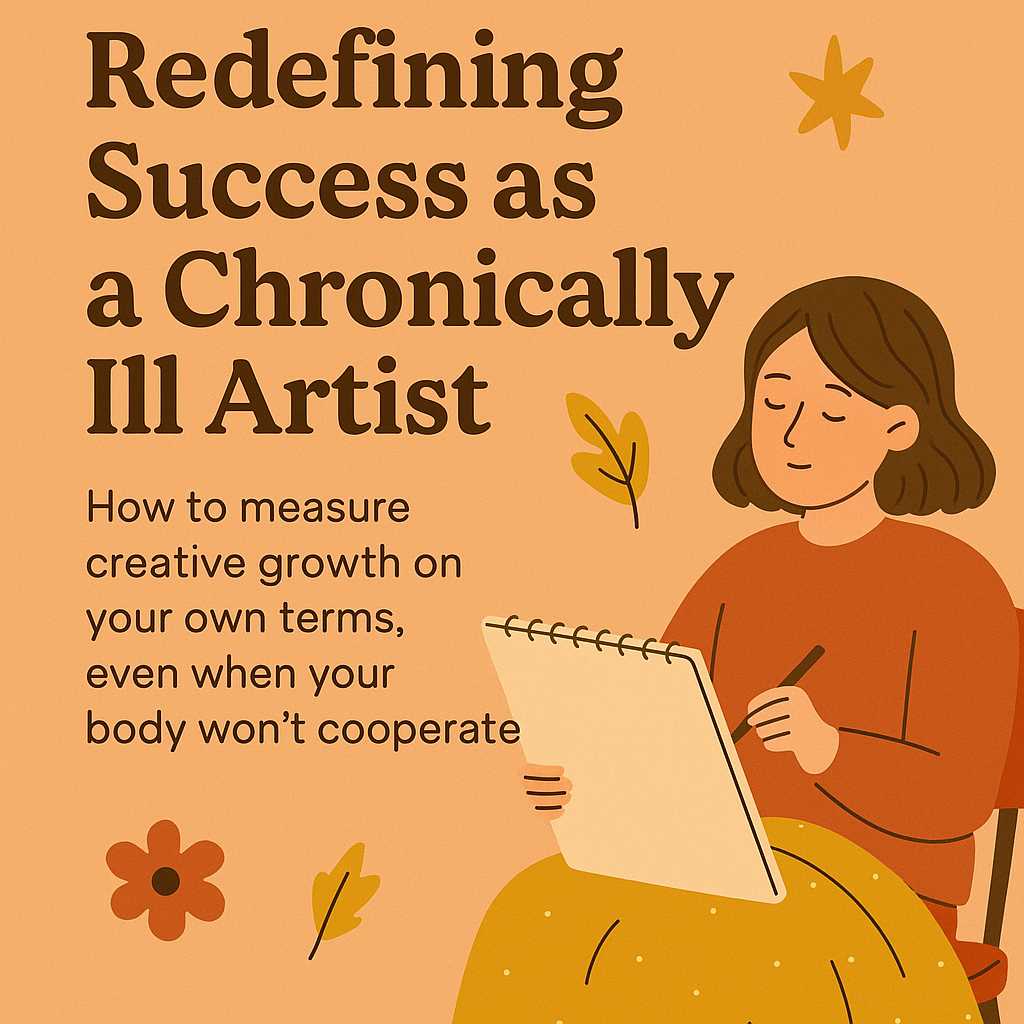
  • Redefining Creative Success with Chronic Illness or Disability

    Redefining Creative Success with Chronic Illness or Disability

    how to define creative success

    What sustainable creative work looks like when your health disrupts your process

    Success in the creative industries is often measured by consistency, productivity, and public visibility. But what happens when your creative capacity is interrupted by chronic illness, fatigue, or unpredictable health conditions?

    This is a question I encounter regularly in my own practice as a working artist with chronic mental health challenges, and in the sessions I facilitate with writers, makers, and creative professionals navigating burnout, neurodivergence, or long-term health conditions.

    The reality is simple but under-discussed: traditional models of creative success are not built for disabled or chronically ill bodies. Yet creative people in these bodies continue to make, reflect, share, and build meaningful work. The key is redefining success based on sustainability and self-awareness, not external metrics.

    Let’s explore how that shift happens – and why it matters.

    Why Success Often Becomes Inaccessible for Chronically Ill Creatives

    Creative success, as defined by dominant culture, often assumes the following:

    • Consistent emotional regulation

    • Predictable physical energy

    • Continuous online presence

    • Ability to network, pitch, and self-promote

    • Linear progress and output

    For someone living with chronic illness or disability, any one of these factors can become inconsistent or inaccessible. And yet, because these standards are rarely questioned, creatives often internalize the idea that they are failing … not just at work, but at being creative at all.

    This mindset leads to shame, disconnection, and burnout. It also leads to many creatives stepping away from their practices completely.

    But the problem isn’t their creativity. The problem is the framework they’re trying to create within.

    Redefining Creative Success with Chronic Illness or Disability

    What Redefining Success Actually Looks Like

    In my 1:1 Creativity and Wellness Sessions, I work with clients to shift their focus from output to alignment. Instead of asking, “Am I doing enough?” we ask:

    • Does my creative practice support or deplete me?

    • Am I honoring my physical and cognitive limits, or pushing through them?

    • Can I recognize progress in ways that reflect my reality, not just external standards?

    • Am I working in rhythms that match my actual life, not an imagined ideal?

    We also identify internalized expectations that may have been inherited from hustle culture, ableist work models, or past experiences of invalidation.

    Redefining success might mean:

    • Changing timelines for projects without self-blame

    • Measuring progress in small, sensory moments instead of visible achievements

    • Pausing public-facing work to protect personal energy

    • Shifting medium or pace to accommodate health fluctuations

    • Reclaiming creative identity even when output is minimal or private

    These are not shortcuts. They are adaptations. And they allow the artist to continue working—honestly, sustainably, and with dignity.

    redefining creative productivity

    The Emotional Weight of Slowing Down

    As someone who supports herself through creative work, I understand the tension here. Slowness isn’t always easy. There are financial pressures. There are fears about being forgotten. There are cultural narratives that equate worth with visibility and speed.

    But I’ve learned, through lived experience, that fighting my own body costs more energy than I can afford. The shift toward working with my real pace, rather than against it, has made my creative work more honest. More consistent. More mine.

    This is a perspective I now share with clients: you don’t have to earn your creative identity through endurance. You can build it through relationship.

    Who This Work Is For

    You might benefit from this kind of reframing and support if:

    Ready to Reframe Success on Your Own Terms?

    I offer private, nonjudgmental Creativity and Wellness Sessions for artists, writers, makers, and creative professionals who are ready to reimagine what creative life looks like within the reality of their body and mind.

    Whether you’re returning after a long pause or actively trying to maintain your work inside a difficult season, we can design something that fits you.

    Book a Call With Me Now

    You don’t need to prove your worth by producing more. You are allowed to succeed slowly. You are allowed to succeed differently.

  • How Freeze, Fawn, and Emotional Shutdown Impact the Creative Process

    How Freeze, Fawn, and Emotional Shutdown Impact the Creative Process

    creative stress responses

    Understanding trauma responses in creative professionals and how to offer meaningful support

    Creative people are often described as expressive, passionate, and emotionally driven. But what happens when they go quiet? What happens when the writer no longer writes, the artist avoids the studio, or the maker forgets what it feels like to create?

    In my work as a creative wellness guide, I meet clients who aren’t creatively blocked in the traditional sense. They’re not resisting their work. They’re disconnected from it. They’re not overwhelmed by deadlines. They’re overwhelmed by silence. Many describe feeling numb, flat, or emotionally distant from the work that once brought them joy.

    This isn’t procrastination. It’s not a lack of discipline. More often, it’s the result of a nervous system response, specifically, a trauma- or stress-induced freeze or fawn state.

    Here’s how that works, and how I help clients find their way back.

    When Creatives Shut Down: The Nervous System’s Role

    Most people have heard of the “fight or flight” response, but those are only part of the body’s stress system. When a person perceives threat—whether physical, emotional, or psychological—the nervous system can also activate freeze or fawn states. These are especially common in people with trauma histories, chronic health conditions, or neurodivergence.

    • Freeze: The creative feels emotionally numb, foggy, and immobilized. They may report “not feeling like themselves” or describe sitting in front of their work with no internal response.

    • Fawn: The creative over-functions in response to perceived threat or rejection. This often looks like people-pleasing through art—creating to satisfy others, overcommitting to projects, or staying agreeable at the expense of authenticity.

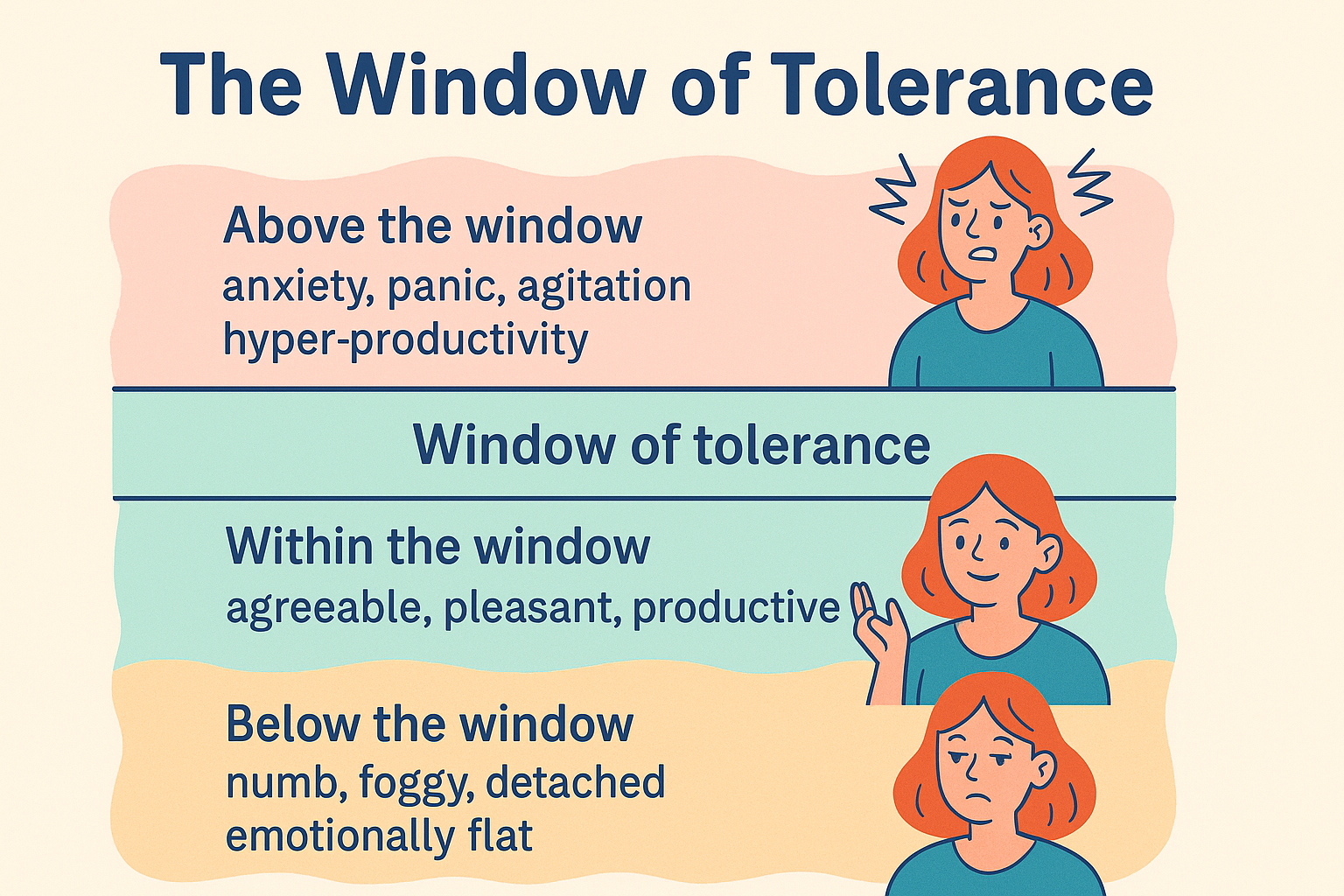
    These responses often place the person outside their window of tolerance, the emotional zone in which they can think clearly, feel safely, and engage creatively.

    window of tolerance in creativity

    Why This Matters in Creative Work

    For many artists, writers, and entrepreneurs, creativity is more than self-expression. It’s regulation. It’s meaning-making. When they lose access to that connection, it can trigger shame, self-doubt, and identity disruption.

    Clients in freeze or fawn often tell me:

    • “I can’t remember why I cared about this project.”

    • “I feel emotionally blank.”

    • “I don’t feel blocked, I just feel gone.”

    • “I say yes to everything even when I’m too tired to create.”

    These are not motivational problems. These are nervous system realities. And without the right kind of support, they tend to compound.

    How I Support Clients Experiencing Freeze, Fawn, or Creative Numbness

    creative unblocking

    My approach blends expressive arts techniques with principles from psychology, trauma-informed care, and narrative therapy. Here’s what that often looks like in session:

    1. Nervous system education

    We talk through what the window of tolerance is, how to recognize where they are in the stress cycle, and how that might be impacting their creative process.

    2. Shame-free creative reframing

    Instead of forcing productivity, we identify the protective function of the shutdown. Together, we reframe the client’s numbness as an invitation to rest, listen, or change direction—not a personal flaw.

    3. Gentle sensory-based reentry

    I help clients reconnect with creativity through low-pressure activities that reawaken tactile engagement, such as fiber work, collage, or voice journaling. This often builds the bridge back to deeper work.

    4. Identity repair

    When someone has been in freeze or fawn for a long time, their creative identity often suffers. We do the work of remembering who they are—not just through what they make, but through how they relate to the act of making.

    This Work Is for Creatives and Those Who Support Them

    I work with self-employed artists, full-time writers, therapists, neurodivergent creatives, and people returning to creativity after illness or trauma. My sessions are not therapy, but they are trauma-aware, compassionate, and based on an understanding of how health impacts art.

    If you are a therapist or coach looking for creative-adjacent support for your clients, I also offer consultation and collaboration.

    Book a Session or Reach Out

    If you or someone you support is navigating creative numbness, identity disruption, or freeze states, I can help.

    Book a Session with Me Today

    Understanding is the first step. From there, we build a path back to creative connection that honors your nervous system and your truth.

  • How Mental Health Affects Creative Motivation: What Looks Like Laziness Might Be Something Else

    How Mental Health Affects Creative Motivation: What Looks Like Laziness Might Be Something Else

    How Mental Health Affects Creative Motivation

    Understanding the real reasons artists, writers, and makers struggle to create, and how to support them

    If you’re a creative professional or someone who supports creatives, you’ve likely heard this before:

    “I just can’t seem to get started.”
    “I know what I want to make, but I’m not doing it.”
    “I feel like I’m lazy, but I know that’s not really true.”

    When a creative person stops making, it’s easy to assume the problem is motivation or discipline. But in my work with artists, writers, and makers, I’ve seen a different story emerge. Often, the perceived laziness is actually a symptom of something deeper.

    Whether you are experiencing these struggles yourself or work with creatives in a therapeutic, coaching, or teaching role, this post outlines how mental and physical health challenges disrupt the creative process. It also offers a more compassionate and effective way to respond.

    When “Laziness” Is Really Something Else

    In my private sessions, I work with creatives navigating anxiety, depression, ADHD, chronic illness, trauma, burnout, or neurodivergence. They are sensitive, thoughtful, and often deeply committed to their work. Yet they find themselves blocked, inconsistent, overwhelmed, or disconnected from the creative identity they once held closely.

    This is not about resistance for the sake of resistance. It is about:

    • Executive dysfunction that makes task initiation feel impossible

    • Sensory overload that prevents sustained focus

    • Burnout or nervous system exhaustion that drains emotional capacity

    • Internalized shame from not being “productive enough”

    • Unrealistic expectations about how creativity is supposed to look

    These are not character flaws. They are common experiences for people living with mental health or chronic physical conditions. Yet because creative culture often glorifies constant output, these artists tend to feel like they are falling short.

    How Mental Health Affects Creative Motivation
    How Mental Health Affects Creative Motivation

    What Creative Support Should Actually Look Like

    Support for blocked or inconsistent creatives must acknowledge the realities of health and nervous system regulation. In my one-on-one sessions, I take a flexible, integrative approach grounded in psychology and expressive arts. This often includes the following:

    1. Reframing the Narrative

    Many clients hold the belief that inconsistency means failure. Together, we examine where that story originated and begin to replace it with a more humane and sustainable perspective. Motivation becomes less about pressure and more about alignment.

    2. Identifying Hidden Patterns

    Avoidance, perfectionism, and shutdown often stem from protective patterns. These patterns may have helped in the past but now stand in the way of creative engagement. By identifying them with curiosity, we can develop strategies that are supportive instead of punishing.

    3. Exploring Adaptive Practices

    Sometimes the usual creative tools or routines no longer match a person’s current capacity. I help clients experiment with new formats, flexible timelines, or sensory-based approaches that support their emotional and physical needs.

    4. Validating Cyclical Rhythms

    Creative timelines are rarely linear, especially when health is part of the equation. In session, we create realistic plans that account for energy fluctuations and emotional labor. This gives clients permission to pause without losing momentum or self-trust.

    Who These Sessions Are For

    My 1:1 Creativity and Wellness Sessions are designed for:

    • Creatives who feel blocked, inconsistent, or ashamed of not producing

    • Artists navigating illness, burnout, or neurodivergence

    • Writers experiencing emotional or sensory overwhelm

    • Therapists, coaches, and facilitators seeking support for creative clients

    • Anyone looking to rebuild their creative identity with clarity and care

    Sessions are personalized and collaborative. I draw on my Master’s degree in Psychology, my lived experience managing a chronic mental health condition, and extensive training in narrative therapy, expressive arts, and somatic awareness.

    You Don’t Have to Push Through Alone

    If you are feeling disconnected from your creative work, or you are trying to support someone who is, I want to offer a new possibility. What looks like laziness may actually be a misinterpreted survival response. What seems like inconsistency may be the nervous system asking for rest, ritual, or redirection.

    There is a way to reconnect with creativity that honors the truth of your experience. You do not have to meet impossible standards. You do not have to do this alone.

    Book Your First Session With Me Today

  • How Health Affects Creativity and What You Can Do About It

    How Health Affects Creativity and What You Can Do About It

    how mental health impacts artistic creativity

    Creative wellness strategies for artists, writers, and makers navigating mental or physical challenges

    If your creativity has felt distant lately, there may be more happening beneath the surface than just a block. You might be navigating invisible pressures that come from living with anxiety, depression, chronic illness, ADHD, or trauma. You might be trying to create inside a body or brain that is tired, foggy, overwhelmed, or in recovery. And you might be blaming yourself for struggling, even though your creative process is doing its best to keep up with everything you’re carrying.

    I know this pattern deeply, both in my own life and in the lives of the artists and makers I work with. I am a full-time writer-artist with a background in psychology and years of experience living with a mental health condition that has shaped every part of how, when, and why I create. I have also spent more than a decade exploring the role of craft, creativity, and expressive arts as tools for self-awareness and resilience. If you are feeling disconnected from your art, your process, or your identity as a creative person, this post is for you.

    This is not just about understanding the problem. It is about offering you a gentler path forward.

    Why It Feels Harder to Create When Your Health Is Impacted

    We often treat creativity like something that should always be accessible. If you are a creative person, the assumption is that your ideas should keep coming and your hands should keep making. But creativity is not separate from your nervous system. It is not separate from your pain levels or your thought patterns. When your health shifts, your creativity shifts with it.

    The change might show up in your focus, in your ability to start or finish things, in your energy, or in the way you relate to your own voice. You might avoid the work entirely. You might overwork in a burst of pressure, then crash. You might find yourself cycling through self-criticism because you cannot keep up with the pace you used to hold.

    This does not mean you are failing. It means you are operating in a different creative environment than before. The conditions have changed. Your process may need to change with them.

    Six Areas Where Creativity and Health Intersect

    How Health Affects Creativity and What You Can Do About It

    Here are six creative wellness factors I often explore with clients during one-on-one sessions. Each offers insight into how your body, mind, and circumstances shape your work. None of these are flaws. They are simply entry points for curiosity.

    1. Creative Process

    Your rituals, flow state, and pacing can all shift depending on what you are experiencing internally. You might find that your usual routines no longer work when you are managing brain fog or anxiety. Instead of pushing harder, it can help to experiment with a slower, more sensory approach. I often return to crochet or gentle writing prompts when my usual mediums feel inaccessible. These alternate forms allow me to stay connected without demanding the kind of cognitive load that writing a full essay might require.

    2. Productivity Expectations

    Many artists internalize the idea that their value is tied to their output. When mental or physical health affects consistency, it is common to feel shame or doubt. But productivity in a creative life is not the same as it is in a corporate model. Creative cycles are nonlinear. Some seasons are for making. Others are for resting, observing, or healing. Recognizing your own rhythm allows you to stop fighting what is actually happening.

    3. Creative Medium

    Health conditions can change how accessible a medium is. If you have chronic pain, visual overload, or limited stamina, it might be time to explore forms that offer more physical ease or emotional containment. That does not mean giving up your art form. It means expanding your toolbox. During a particularly hard season, I transitioned temporarily from structured blogging to fiber arts and freeform collage. The work I made during that time saved me from total creative disconnection.

    4. Emotional Expression

    When you are living through intense emotional states, your creative work may shift to reflect that. Sometimes this opens up powerful channels of truth. Sometimes it becomes too raw to access safely. I often guide clients through expressive writing or image-based storytelling as a way to move into deeper emotional waters without feeling overwhelmed. The goal is not to force healing, but to make space for expression when and how it wants to emerge.

    5. Creative Identity

    It is incredibly common to question whether you are still an artist when your practice has slowed or changed. I often remind people that identity is not defined by productivity. You are still a writer, even if you have not written this month. You are still an artist, even if your hands have been still. One of the most powerful tools I recommend is what I call a “brag book,” a small personal record of moments, words, works, and memories that remind you who you are. This is not about ego. It is about anchoring yourself in your own creative truth.

    6. Creative Sustainability

    If you rely on your creative work as part of your livelihood, the pressure to perform can become even more intense. When health limits your capacity, you may need to reimagine your systems. That could look like spacing out client work, shifting to asynchronous support, or redefining your success metrics. In my one-on-one sessions, I work with people to gently restructure their creative businesses so they can protect their energy without sacrificing their passion.

    How Health Affects Creativity and What You Can Do About It

    Where to Begin When You Feel Disconnected

    The most helpful first step is to stop judging yourself. If your creative life feels out of sync, that is not a sign of weakness. It is a sign that something in your internal or external world needs attention.

    Ask yourself this:

    What is one challenge I have experienced recently in my creative life? What might the connection be to my health?

    That question is often the beginning of a real shift. From there, you can start making aligned decisions instead of reactive ones. You can begin creating a new kind of relationship with your art—one that is compassionate, responsive, and built for the life you are actually living.

    Want Support? Let’s Explore This Together

    If this post resonated with you, you are not alone. I offer 1:1 Creativity and Wellness Sessions for artists, writers, and makers who want a grounded, nonjudgmental space to explore the intersection of health and creativity. These sessions are part conversation, part reflection, and part gentle strategy. We work with who you are, what you are carrying, and what kind of creative life feels sustainable and meaningful for you now.

    Book your session here

    You do not have to figure it all out alone. Your creativity is still here. It may just need a different kind of care right now.

  • Hand Sewing vs. Machine Sewing: A Mindful Maker’s Guide

    Hand Sewing vs. Machine Sewing: A Mindful Maker’s Guide

    Sewing is more than just a way to create clothing, quilts, or home décor—it’s a deeply personal craft that connects us to tradition, creativity, and even our own sense of well-being. For those who approach sewing with mindfulness and intention, both hand sewing and machine sewing offer unique rhythms, challenges, and meditative qualities.

    While neither is inherently better than the other, they offer different experiences in terms of pace, focus, and sensory engagement. Whether you’re drawn to the slow, rhythmic pull of a hand-sewn stitch or the steady hum of a sewing machine, understanding these differences can help you choose the right method for the moment and enhance your creative experience.

    Let’s explore how each approach supports mindfulness and crafting with intention, along with tips to make the most of their unique benefits.

    🧶 Want to learn more? Click here to join Craft to Heal.

    Hand Sewing: The Art of Slow, Intentional Stitching

    Hand Sewing: The Art of Slow, Intentional Stitching

    Hand sewing is the ultimate slow stitching practice—a methodical, tactile experience that invites complete presence. Unlike machine sewing, which can move at a rapid pace, hand sewing requires patience, making it a natural fit for those looking to incorporate mindfulness into their craft.

    How Hand Sewing Supports Mindfulness

    🧵 Rhythmic, Repetitive Movement – The process of drawing a needle through fabric, pulling it taut, and repeating creates a meditative, repetitive rhythm. Much like knitting or crocheting, this steady movement helps quiet the mind and center attention.

    🧵 Deep Engagement with Fabric & Thread – When hand sewing, you are fully in control of each stitch. You feel the tension of the thread, the way the fabric gives, and the moment the needle punctures through. This heightened sensory awareness helps anchor you in the present.

    🧵 Slows the Creative Process – Because hand sewing takes time, it naturally encourages patience and presence. Instead of rushing to finish a project, you learn to appreciate the journey of each stitch, making it a powerful tool for relaxation.

    🧵 Connection to Tradition & HeritageHand stitching has been practiced for centuries. Many sewists feel a deep sense of connection to past generations when working by hand, making the process feel meaningful and grounding.

    Tips for Enhancing Mindfulness in Hand Sewing

    Breathe with Your Stitches – Try inhaling as you insert the needle and exhaling as you pull the thread through. This simple practice aligns your breath with your movement, fostering deeper relaxation.

    Choose a Quiet Space – Hand sewing doesn’t require machines or distractions. Use this as an opportunity to sew in silence or with calming background sounds like nature recordings or soft instrumental music.

    Savor the Texture & Sensation – Notice how different fabrics feel between your fingers. Observe how the thread glides, knots, or resists. Let yourself experience the tactile nature of sewing.

    Make Peace with Imperfection – Hand-sewn stitches will never be perfectly uniform—but that’s part of their beauty. Celebrate the character and uniqueness in each stitch rather than striving for machine-like precision.

    Use It for Small, Meaningful Projects – Instead of reserving hand sewing for only repairs, try hand-stitching an entire small project—like a patchwork block, sashiko-style embroidery, or a delicate appliqué. The experience of creating something fully by hand is incredibly rewarding.

    Machine Sewing: The Flow of Efficiency & Focus

    Machine Sewing: The Flow of Efficiency & Focus

    While machine sewing is often associated with speed and productivity, it can also be a mindful practice when approached with intention. The steady hum of a sewing machine, the rhythmic feeding of fabric, and the coordination of hands and foot pedal can create a state of flow, much like playing a musical instrument.

    How Machine Sewing Supports Mindfulness

    🧵 Encourages Full-Body Focus – Machine sewing engages your hands, feet, eyes, and breath all at once. This level of coordination can be an excellent way to practice deep focus and present-moment awareness.

    🧵 Creates a Flow State – When you’re in sync with your machine, time seems to disappear. This state of deep focus, often referred to as “flow”, is incredibly calming and can be a great stress reliever.

    🧵 Harnesses the Power of Repetition – Whether you’re chain piecing quilt blocks or stitching long seams, machine sewing has a rhythmic, repetitive quality that can feel meditative. The steady movement of fabric and the hum of the machine create a sensory experience that encourages relaxation.

    🧵 Encourages Confidence & Trust in the Process – Sewing machines can feel intimidating at first, but once you develop muscle memory, they offer a sense of empowerment. Trusting your hands to guide fabric smoothly builds confidence and patience—important elements of any mindfulness practice.

    Tips for Enhancing Mindfulness in Machine Sewing

    Match Your Breathing to Your Movements – Just like in hand sewing, try breathing in as you guide fabric into the machine and exhaling as the needle moves through. This creates a steady, calming rhythm between breath and motion.

    Eliminate Distractions – While machine sewing may feel more technical, it can still be a mindful practice. Turn off background noise, set your phone aside, and allow yourself to fully focus on the sound of the machine and the movement of the fabric.

    Emphasize the Sensory Experience – Pay attention to the vibrations of the machine under your hands, the steady whir of the motor, and the way the fabric shifts beneath the presser foot. Let these sensations ground you in the present moment.

    Use Machine Sewing for Large, Repetitive Work – If you’re working on a big quilt or long seams, take advantage of the meditative repetition. Chain piecing, strip sewing, and free-motion quilting all offer opportunities for flow and presence.

    Slow Down Your Speed – While machines can move fast, there’s no rush. Try sewing at a lower speed to focus on each stitch with greater awareness. This helps prevent frustration and keeps you engaged with the process rather than just the outcome.

    Hand Sewing vs. Machine Sewing: Which One to Choose?

    Both hand and machine sewing can be mindful, grounding experiences, but they offer different benefits depending on what you need in the moment.

    Hand Sewing 🧵 Machine Sewing 🚀
    Slow, meditative pace Fast, rhythmic flow
    Full control over each stitch Encourages trust in the process
    Deeply tactile, sensory experience Engages full-body coordination
    Best for small, detailed projects Ideal for large-scale work & repetitive seams
    Rooted in tradition & heritage Creates a sense of empowerment & confidence

    Ultimately, the best choice is the one that aligns with your creative needs and energy level. Some days, you may crave the gentle, meditative rhythm of hand stitching, while other days, you may find peace in the steady, fluid motion of machine sewing.

    Whichever method you choose, approach it with intention. Sewing isn’t just about making something—it’s about the experience of making itself. When you embrace each stitch, each moment, and each breath, you transform sewing from a task into a form of creative meditation.

    🧶 Want to learn more? Click here to join Craft to Heal.